


Africa climate finance gap: Panel warns time is running out
By: Abudu Olalekan
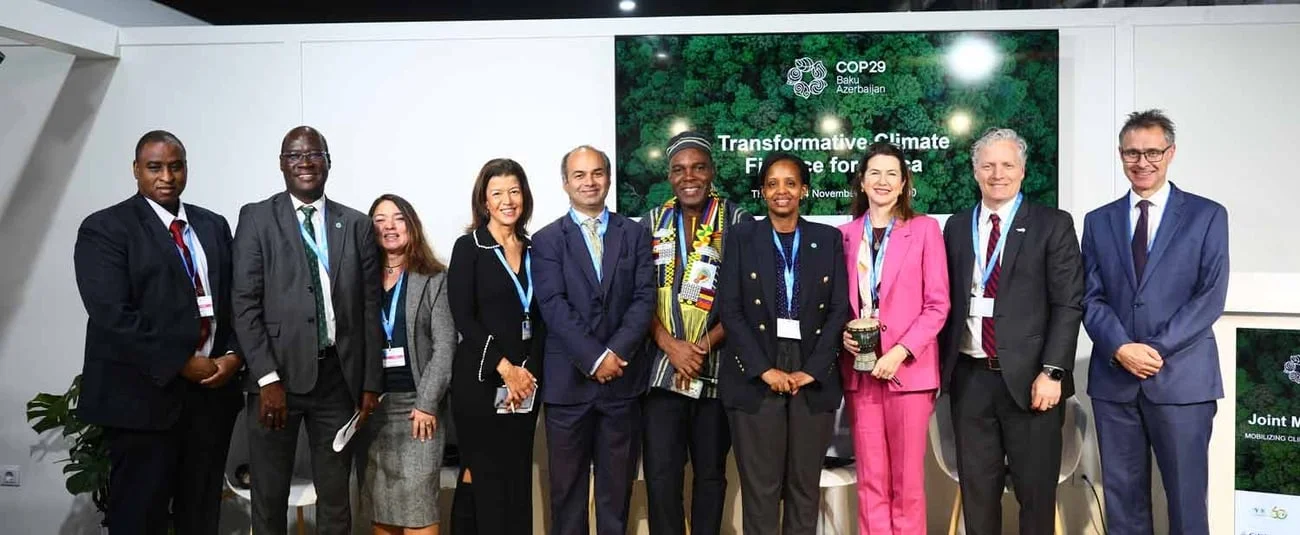
Africa’s Infrastructure & Climate Finance Crisis – Time’s Almost Up, Experts Warn
Time’s not on Africa’s side. That was the quiet, urgent drumbeat running under the 2025 Africa Investment Forum Market Days, where top policymakers, investors and development‑finance leaders tried to wrestle with a hard question: how do you actually pay for the continent’s exploding infrastructure and climate needs before the clock runs out?
On November 27, inside a packed session tagged “Innovative Finance Instruments Powering Africa’s Sustainable Transformation,” the mood was clear. No more business‑as‑usual. No more relying only on old, rigid funding models that move slow while climate shocks move fast.
Zineb Sqalli, Partner and Managing Director at Boston Consulting Group, didn’t ease anyone in gently. She opened with numbers that landed like a punch. By 2050, Africa will have one billion more people. Most of them in cities that don’t exist yet, or exist only half‑built. The continent needs about $150 billion every year for infrastructure just to keep pace. It’s investing only half of that.
Then comes climate. The gap there is even worse. Africa needs around $300 billion each year for climate‑related investments. It gets about $30 billion. A tenth. That’s it.
“The gap is massive,” Sqalli noted, “but it is also a great opportunity.” She pointed toward tools that didn’t even exist on the continent a decade ago: blended‑finance structures, Islamic green bonds, diaspora‑backed vehicles, new infrastructure platforms that spread risk instead of parking it on already‑stressed governments.
Still, opportunity doesn’t close a gap on its own.
Dr Obaid Saif Hamad Al‑Zaabi, Chairman of the Arab Authority for Agricultural Investment and Development, tried to reframe how everyone in the room thinks about food. Not as charity. Not as an afterthought. As an asset class.
Across Africa and the Arab world, climate stress is reshaping harvests, and food insecurity bites deeper every year. For Al‑Zaabi, that means food systems belong at the center of financial strategy, not the margins. “Climate change is no longer an environmental issue – it is a financial risk on our balance sheets,” he warned.
He called for bigger, smarter guarantees. New sustainability‑linked tools. Specialised vehicles for smallholder farmers, whom he described as the “engine” of Africa’s food system. Digitalisation, he added, isn’t some fancy extra; it’s essential. It shrinks information gaps and gives investors something they trust: data.
But even if the money is there, and it is, the projects often aren’t.
Amadou Hott, Chairman of the Africa Advisory Board of Vision Invest and former Senegalese Minister of Economy, didn’t sugarcoat that part. The continent’s biggest bottleneck, he argued, is not a shortage of capital. It’s a shortage of bankable projects.
“If we want to transform the continent, we need to multiply what we are doing today by 100 or even 150,” he said. That means stronger project‑preparation pipelines, far more technical capacity before a project ever reaches a boardroom. And it means taking currency risk seriously, instead of pretending it’ll somehow fix itself.
Hott pushed African governments to look inward. Sovereign wealth funds, pension funds, national reserves – huge pools of African money now parked offshore – could be mobilised at home.
Dr Nasser Al‑Kahtani, Executive Director of the Arab Gulf Programme for Development, brought the conversation back to the people who grow most of Africa’s food. “Seventy percent of the food we eat comes from small farmers. They save the world, but cannot feed themselves,” he said. His fix: blended‑finance structures that gradually move countries “from grants to investment,” building real equity for micro‑entrepreneurs instead of leaving them permanently at the edge.
The private sector view came from Jacques Kanga, Director and Head of Finance at Algest Investment Bank. He walked the room through targeted financial tools that could unlock private capital and chip away at Africa’s estimated $130–$170 billion annual infrastructure funding shortfall.
Among them: infrastructure Special Purpose Vehicles to strip out some sovereign and political risk; blended‑finance setups that push down project costs; diaspora‑backed instruments built on the $95 billion Africans abroad send home each year. Used well, Kanga argued, these mechanisms don’t just raise money. They build transparency, improve governance and calm nervous global investors.
There is, however, one more piece: the law.
Ouns Lemseffer, Partner at Ashurst, pointed to quiet but meaningful progress. Countries are adopting securitisation rules, sustainable‑finance laws, tools for project bonds, Sukuk, debt funds and off‑grid and grid‑electrification programmes like Côte d’Ivoire’s “Programme Électricité Pour Tous”.
Yet she was blunt. Progress is patchy. “A sophisticated legal framework in one area is not enough,” she said. Policymakers need a joined‑up approach, from investor protections to bankruptcy rules, if they want capital markets to support long‑term infrastructure instead of short‑term bets.
As the panel wrapped, the message was sharp and simple. Innovative finance is no longer optional. It is the bridge – or it will be the breaking point.
Africa’s demographic surge, its climate risks, its economic ambitions: all of it now hinges on turning today’s experimental financing tools into mainstream engines of investment. And turning today’s fragile opportunities into real, investable projects.

Olalekan A. Abudu is a seasoned and dedicated News Journalist at REPORTERS ROOM, with over eight years of experience. He specializes in politics, climate change, health, and education, while also covering security, economic, and judicial issues. Committed to accuracy and balanced reporting, Olalekan exemplifies the principles of public-interest journalism.

