


CBAM: How Europe’s Carbon Tax Could Crush Africa’s Industrial Dreams
By: Abudu Olalekan
CBAM implementation in 2026 threatens African industries with carbon penalties. Learn how EU’s border tax creates unequal decarbonisation and what it means for developing economies.
Picture this. You run a small steel factory in Nigeria. You’re trying to grow, create jobs, maybe even export to Europe someday. It’s 2026. You wake up, check your emails, and boom—the rules changed. Again. The EU just slapped a massive carbon tax on your shipment. Not because your steel is dirty, necessarily. But because you don’t have the millions of dollars to hire the consultants needed to prove it’s clean.
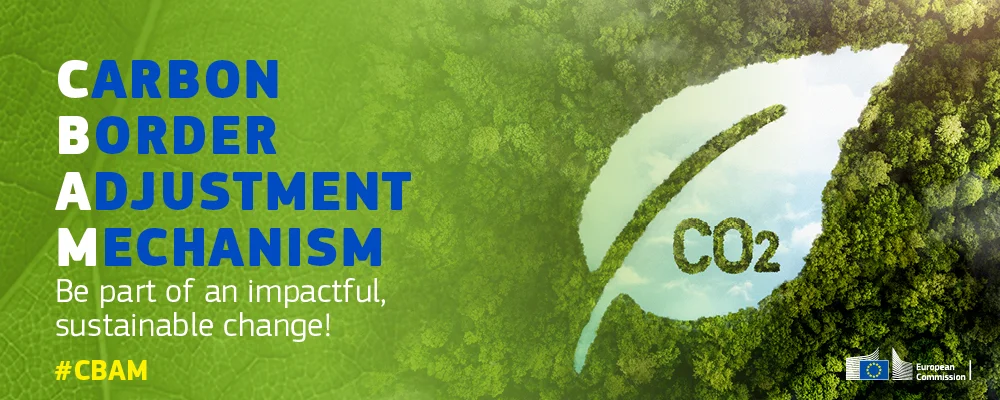
This is the reality of the Carbon Border Adjustment Mechanism (CBAM). And honestly? It sucks.
Officially, Brussels says it’s about “saving the planet.” Preventing carbon leakage and all that jazz. But let’s be real. This isn’t just a climate instrument. It’s a power move. A massive reordering of who gets to be rich and who stays poor. As reported by Reportersroom, this mechanism is less about carbon and more about control.
Here’s the thing. The global economy is shifting. Fast. From January 1, 2026, if you want to sell cement, aluminium, or fertilizers to Europe, you pay a price. A carbon price. On paper, it makes sense. “Level the playing field,” they say. Make European producers pay the same as African ones. Sounds fair, right?
Wrong. It’s a trap.
Competitiveness used to be about how good your product was. How cheap. How fast. Now? It’s about regulatory benchmarks designed in Geneva or Berlin. For Africa, this is dangerous. We are still trying to industrialize. We are babies in the global factory. Europe? They’ve been polluting for 200 years. They got rich burning coal. Now that they’re done, they’re kicking the ladder away so we can’t climb up.
It’s the political economy of unequal decarbonisation. Plain and simple.
CBAM transfers the cost of their transition onto us. African exporters didn’t write these rules. We don’t have the tech to comply. So what happens? We eat the cost. Margins shrink. We can’t reinvest. We stay poor. Meanwhile, European governments are handing out subsidies to their own industries to help them switch to green energy. It’s rigour for the outsider, flexibility for the insider. It’s protectionism wearing a climate costume.
Look at the stats. It’s insulting. Africa has 18% of the world’s people. We produce less than 4% of emissions. Per capita? We’re barely touching 1 tonne. The EU is doing 7 or 8 tonnes. Yet, we get hit with the bill. We get the floods, the droughts, and now, the trade barriers.
This isn’t climate virtue. It’s under-industrialisation punished.
The worst part? CBAM assumes we can just “switch to clean tech.” Switch? With what money? Interest rates here are double digits. Over 600 million people don’t even have electricity. You can’t decarbonise a factory that runs on a generator. The carbon intensity of African industry isn’t a choice; it’s a sentence imposed by colonial infrastructure and lack of cash. CBAM treats it like a behavioural problem. It’s not. It’s a structural one.
If this keeps going, Africa gets locked out. We stay the raw material mine, exporting dirt cheap stuff, buying back expensive finished goods. CBAM reinforces that peripheral status. It says: “You can have the pollution, but you can’t have the profit.”
So, what’s the play? We can’t just comply. That’s suicide. We need Green Industrialisation. We need to build our own value chains. But—and this is the big but—Europe has to pay. If they want us to go green, they need to pay for the technology transfer. The $100 billion climate finance promise? Still missing, by the way.
Without cash, CBAM is just a fancy word for theft. It undermines the Paris Agreement. It turns cooperation into coercion.
The danger is real. We risk decarbonisation without industrialisation. Compliance without competitiveness. We become green graves instead of green economies. Africa needs to stop asking for permission and start demanding equity. We need to tell the EU: You broke it, you buy it. Don’t tax our dreams because you’re scared of your own future.
It’s messy. It’s unfair. But that’s the global economy for you. And CBAM? It’s just the latest proof that the game is rigged.

Olalekan A. Abudu is a seasoned and dedicated News Journalist at REPORTERS ROOM, with over eight years of experience. He specializes in politics, climate change, health, and education, while also covering security, economic, and judicial issues. Committed to accuracy and balanced reporting, Olalekan exemplifies the principles of public-interest journalism.

