


Lagos Climate Funding: Wahab Tells the West to Back Vulnerable Cities
By: Abudu Olalekan
Tokunbo Wahab didn’t mince words in Berlin.
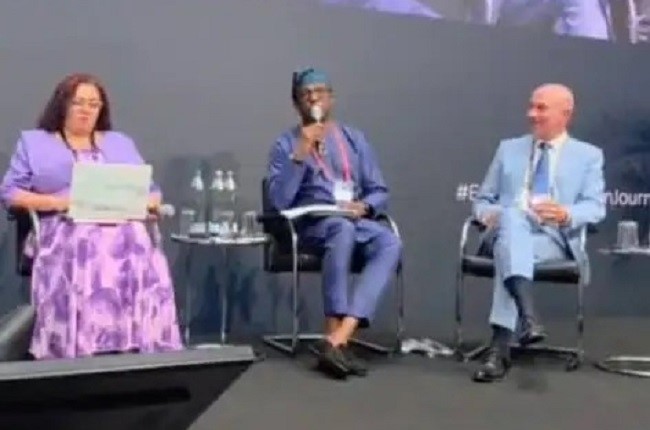
Standing before global leaders, the Lagos State Commissioner for Environment and Water Resources spoke plainly at the second Berlin Climate Mobility Forum 2026. Wealthy countries heard it straight – cash matters now, not pledges. Cities facing rising tides want support that shows up, not speeches. Empty words won’t shield streets from floods. What counts is funding that reaches the ground. Promises have worn thin; action hasn’t kept pace. Real help means resources moving fast, without delay. Talks are common, but bank transfers? Rare. The moment demands more than goodwill. Money must flow where storms hit hardest.
Out in Germany, the meeting pulled together heads of state from islands and shorebound places feeling the squeeze of higher oceans and wilder storms. A seat at the panel called “Protecting Rights in the Face of Sea Level Rise” gave Wahab room to speak plainly – richer nations must stop circling the issue and start sending real support, particularly where coastlines are fraying across the Southern world.
“The West must show more rhetoric and demonstrate a strong commitment to climate funding,” he told the room.
What matters most to Wahab is who can get in. In his view, funds meant for climate action remain key for urban survival amid rising temperatures. Yet those resources must arrive where hardship runs high. Local control over funding appeals to him, alongside sharing practical tools across borders. Stronger ties between at-risk towns and global bodies seem necessary too. Unity among regions facing crisis now feels urgent.
His message leaned heavily on tech. Tools like flood models or shoreline designs should move freely, Wahab argued – especially into wealthier nations passing them along. Cities facing threats start finding smarter paths when they swap what works. Learning spreads, not just hardware.
Out there, rising seas ignore maps. Because of this, he urged faster funding for stronger barriers – ones keeping homes, jobs, towns intact wherever water climbs.
“Lagos is ready to lead, but cannot do it alone,” Wahab said.
What he wanted stood clear – support for at-risk cities, packed with tools and knowledge to meet looming challenges. Not later. Now.
Later that week, officials from Saint Kitts and Nevis, the Maldives, Ghana, Cabo Verde, and Italy took part in the discussion. On Friday, June 19, 2026, news about Wahab showing up came out through a note put forward by Kunle Adeshina, who leads public communication for the ministry, issued from Lagos.

Olalekan A. Abudu is a seasoned and dedicated News Journalist at REPORTERS ROOM, with over eight years of experience. He specializes in politics, climate change, health, and education, while also covering security, economic, and judicial issues. Committed to accuracy and balanced reporting, Olalekan exemplifies the principles of public-interest journalism.
