


COP31: LDC Group Says SB64 Outcomes Fell Short
By: Abudu Olalekan
It’s been a few days since the June climate talks (SB64) wrapped up in Bonn on June 18. And the Least Developed Countries (LDC) Group on Climate Change isn’t exactly happy about how it went.
Not even close.
They’re worried. As climate impacts pile up around the world — from brutal floods to creeping droughts — the response from negotiators just isn’t keeping up.
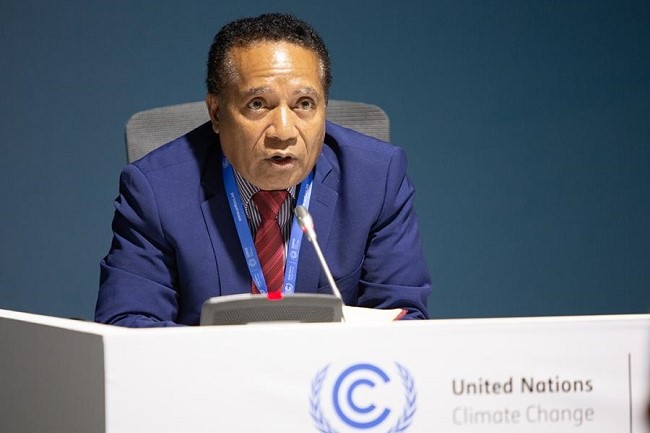
“We are deeply concerned that as climate impacts accelerate, our response remains dangerously short,” said Ambassador Adao Soares Barbosa, Chair of the LDC Group. “We are disappointed at the lack of progress across key agenda items at SB64, in particular on adaptation and mitigation. We must show that multilateralism can deliver.”
That pretty much sums it up.
For the LDCs, this isn’t some abstract debate happening in a conference hall. It’s about their homes, their farms, their families. And they’re making one thing absolutely clear: science isn’t up for negotiation.
It never should be.
“The science is neither contentious nor negotiable,” the Group said bluntly. “It is the foundation for climate action and the basis for protecting vulnerable countries from escalating climate impacts.”
For them, 1.5°C isn’t a talking point or a political preference. It’s a lifeline. Plain and simple.
And after two weeks in Bonn, they left with the sinking feeling that there’s still a mountain to climb before COP31 rolls around in Antalya, Türkiye.
If you ask them what’s keeping them up at night, it’s climate finance. No surprise there.
“Climate finance continues to be our most pressing concern,” the Group said. “SB64 showed that trust depends on delivery.”
They want to see the Adaptation Fund finally sorted out — and crucially, its smooth transition to serving the Paris Agreement exclusively. That fund, after all, has been a lifeline for adaptation projects in some of the world’s most vulnerable places for years.
But that’s not all. They’re also calling on COP31 to make climate finance actually accessible, especially for countries like theirs that don’t have armies of consultants on speed dial. They’re pushing for the promised tripling of adaptation finance and real progress on the Climate Finance Work Programme, in line with Article 9.1 of the Paris Agreement. Because promises are one thing. Getting money where it’s needed is another.
Then there’s the Global Goal on Adaptation. At COP30 in Belém, countries agreed on the Belém–Addis Vision and the Belém adaptation indicators. It should have been a moment to build on that in Bonn. Instead, it went nowhere. And that stung.
On mitigation, things weren’t much better. The Group is urging Parties to get serious about the Mitigation Work Programme and actually drive down emissions this decade — not next. Any overshoot of 1.5°C, they warn, will dump vulnerable communities, economies and entire ecosystems straight into the path of impacts that are already getting scary and, in some cases, may be irreversible. The fact that they couldn’t land even a decent outcome on mitigation in Bonn? That didn’t sit right with them at all.
It’s not all doom though. On just transition, they did see a bit of progress. Text has been forwarded to COP31, which they say is a step forward. But any Just Transition Mechanism going forward has to actually work for LDCs — not just the usual suspects — and has to reflect the realities they’re facing on the ground.
At the end of the day, their message is a pretty simple one.
Their communities can’t put off the next drought. They can’t delay the next flood. And they sure can’t sit down and negotiate with the next cyclone.
They don’t need more warm words. They need leadership. They need solidarity. And above all, they need delivery.
So as the road to COP31 in Antalya gets shorter, the LDC Group is pleading with every Party: act like the science is real. Act like people’s lives are on the line. Because right now, for far too many, they are.

Olalekan A. Abudu is a seasoned and dedicated News Journalist at REPORTERS ROOM, with over eight years of experience. He specializes in politics, climate change, health, and education, while also covering security, economic, and judicial issues. Committed to accuracy and balanced reporting, Olalekan exemplifies the principles of public-interest journalism.