


Nepal Floods Leave Widespread Destruction as Aid Crisis Grows
By: Abudu Olalekan
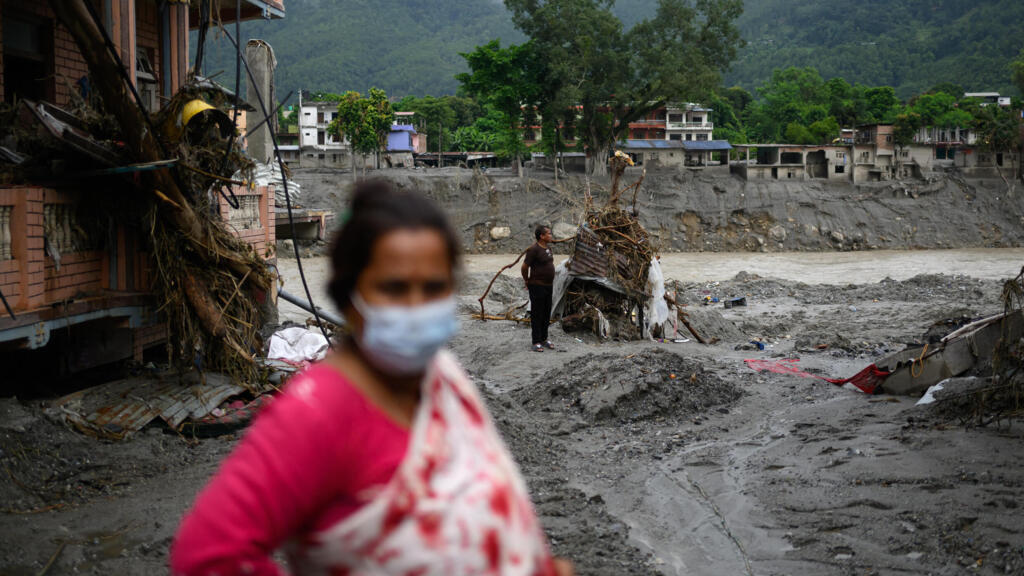
Nepal floods have left communities shattered across the Himalayan country, with hundreds confirmed dead, thousands still missing and vital infrastructure badly damaged.
Rescue teams are searching for more than 2,400 people, while the confirmed death toll has risen above 620. The government has appealed for financial assistance, saying the disaster caused a heavy loss of lives and property.
Officials are still trying to determine the full extent of the damage. And the danger isn’t over yet. More flooding remains possible in already vulnerable areas.
Thousands left with nowhere to go
The floodwaters swept through entire communities on Wednesday, destroying homes and forcing families into temporary shelters.
The Red Cross described the emotional and physical impact as enormous. It estimates that as many as 93,000 people may have been affected in the country of roughly 30 million.
Reaching some communities has become a major problem. Bridges are gone. Key roads have been cut off. In the worst-hit areas, rescue workers are struggling just to get through.
Education has also taken a serious hit. According to UNICEF, at least 18 schools were destroyed and another 20 damaged, affecting around 10,000 school-age children.
For many families, returning to normal life may take a long time.
A major test for Nepal’s young government
The disaster comes at a politically sensitive moment, just before the anniversary of the September 8–9 anti-corruption demonstrations that brought down the previous government.
Nepal is now led by Prime Minister Balendra Shah, the 36-year-old former rapper and Kathmandu mayor widely known as Balen.
Shah swept to victory in the March elections after campaigning on promises of political change. His government now faces its biggest test yet: rebuilding destroyed communities, restoring essential services and maintaining public confidence during a national emergency.
The scale of the job is huge. So are the expectations.
A fragile economy faces another blow
Nepal had limited financial room even before the floods. Recovering from destruction on this scale will put more pressure on an economy where many workers already lack stable or formal employment.
The World Bank estimates that 82 percent of the country’s workforce is informally employed. Nepal’s gross domestic product per person stood at about $1,447 in 2024.
The country also depends heavily on money sent home by Nepalese working abroad, particularly in Gulf countries. Remittances are equivalent to nearly one-third of Nepal’s GDP.
Tourism is another important source of income. It contributes around 6.4 percent of GDP and supports about 15 percent of jobs, according to the World Bank.
Flood damage could disrupt trekking routes, pilgrimage sites and other tourist activities, especially in northern Himalayan areas. That would mean lost income for guides, hotel operators, transport workers and small businesses already struggling to recover.
Growing fears over disease
The floods have damaged health facilities at a time when medical services are urgently needed.
Three health posts were destroyed, while one hospital sustained partial damage. Access to two other hospitals has also been affected, according to the World Health Organization.
The WHO warned that overcrowded shelters, unsafe water, damaged sanitation systems and interrupted medical services could increase the spread of communicable diseases.
Clean drinking water will be crucial. So will getting medicine and health workers into isolated communities before conditions worsen.
Serious damage to the power sector
Nepal’s electricity network has also suffered a major setback.
The Nepal Electricity Authority said 11 hydropower stations and one solar power facility had stopped operating. Together, they have a capacity of 431.1 megawatts—about 10 percent of the country’s installed electricity generation capacity.
Another 15 power projects still under construction were damaged. Those projects were expected to produce a combined 470 megawatts once completed.
More than 900 hydropower workers remain missing.
For now, the priority is finding survivors and getting food, shelter and medical care to communities that have been cut off. But the longer challenge is already clear: Nepal must rebuild homes, roads, schools, hospitals and power facilities while protecting people from the risk of further flooding.

Olalekan A. Abudu is a seasoned and dedicated News Journalist at REPORTERS ROOM, with over eight years of experience. He specializes in politics, climate change, health, and education, while also covering security, economic, and judicial issues. Committed to accuracy and balanced reporting, Olalekan exemplifies the principles of public-interest journalism.