



Iran president apologises to Gulf nations over recent strikes
By: Abudu Olalekan
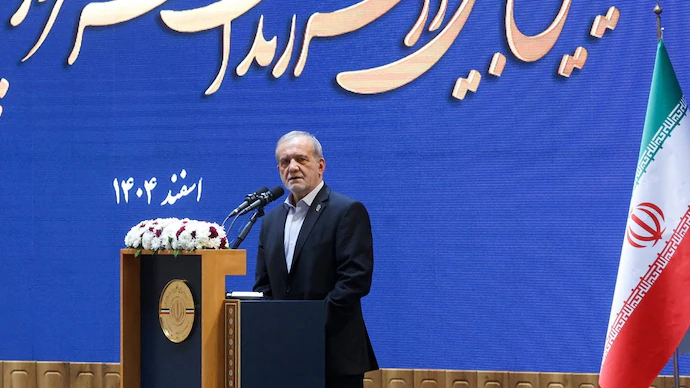
Under the burning horizon of the Gulf, flashing lights cut through dark air as alarms wailed below. Then came Masoud Pezeshkian, Iran’s leader, facing a TV lens, voice low – “I’m sorry.” The scene held something staged yet real, almost like a long act of theater freezing mid-breath.
No long speeches slowed him down. A quiet sorry left his lips, aimed at nations struck by Iran, voice firm yet eyes darting toward the lens like he felt every gaze upon him. Not attacking those we’re tied to – that came next, almost offhand. Brothers slipped into the sentence, loose and unplanned, exposing how kinship and history twist through power here.
It ended fast. Without warning. Less speech, more note left on a table. Still, what came through carried something heavy. Missiles from Iran had crossed into UAE, Bahrain, Saudi Arabia – sky routes lit up with alerts for nearly a week. Planes changed paths midair, passengers shifted plans in haste. Over the Gulf, empty corridors formed where jets once flew, each new hour marked by held breath.
Pezeshkian made clear the trio leading Iran temporarily, put in place after recent unrest, instructed military units to halt cross-border operations – unless another country launches an assault first. Not one strike into nearby nations, not even a missile launch, should happen if there’s no incoming threat, he said again, words stiff like policy paper but voice softened as if calming nerves.
A quiet comment slipped in, softening the weight of his regret with just a touch of hope. Not through force, but by talking things through – that is how this should move forward, he suggested. His words “not through force” came gently, as though reminding someone to choose patience during an argument at breakfast instead of turning away angry.
A warning came quietly, aimed at Gulf leaders who might lean too far into foreign control. Not launching strikes on Iran – that message carried weight, part concern, part unspoken consequence. Power here rarely sits where it seems; strings are pulled beyond visible borders. Smaller countries sometimes find themselves in front of danger without seeing how they got there.
Yet the apology brought up more doubts than clarity. Was the order from the leadership council going into effect right away? Shortly after the transmission ended, word arrived of missiles being shot down above the United Arab Emirates, while alarms sounded in Bahrain. It felt strangely aligned, like the announcement and the strikes didn’t match pace.
To folks in the Gulf, the update brought both relief and doubt. Hope crept in for some, like a slow sunrise. A shopkeeper in Manama said he might stop shutting up early – air raids had kept him shuttered for days on end. He added, quietly, maybe breathing will get easier now. Not everyone bought it though. One airline pilot, rerouted more than once already, shrugged off the statement. Words don’t clear the skies, he remarked. What matters comes after silence.
Tehran felt unlike before. Inside the leader’s residence, staff moved fast – messages prepared for Riyadh, Muscat, Doha. All the while, European contacts received urgent calls one after another. Then came a hushed talk with military command, details passed without delay. Talk of “talks instead of conflict” wasn’t mere words. This shift might redraw how Iran deals with the world, starting now.
Now things slowed across the region. A message came from the United Arab Emirates – peace moves are good, yet any threat to their authority gets answered strongly. From Bahrain’s diplomatic office, similar words followed: staying within global rules matters most. Not quite agreement, not quite warning either
Over in Europe, eyes stayed fixed on Tehran. Some observers across the Atlantic thought the statement might soften penalties, whereas voices near the Potomac suggested it hinted at stepping back from escalation that risked shaking energy supplies.
A quiet unease stuck around after the broadcast ended. Though the president spoke plainly, what was happening outside stayed messy. With missiles in the air and sirens cutting through the noise, few believed an apology could bring calm so easily. Peace felt distant, maybe just another pause between flare-ups in a story that never really ends.
One day might show whether Tehran holds its ground, yet the Gulf could still echo with surprise attacks and shaky pauses. Right now comes another news story, another sorry note, along with a quiet belief – perhaps talk beats thundering shells after all.

Olalekan A. Abudu is a seasoned and dedicated News Journalist at REPORTERS ROOM, with over eight years of experience. He specializes in politics, climate change, health, and education, while also covering security, economic, and judicial issues. Committed to accuracy and balanced reporting, Olalekan exemplifies the principles of public-interest journalism.

