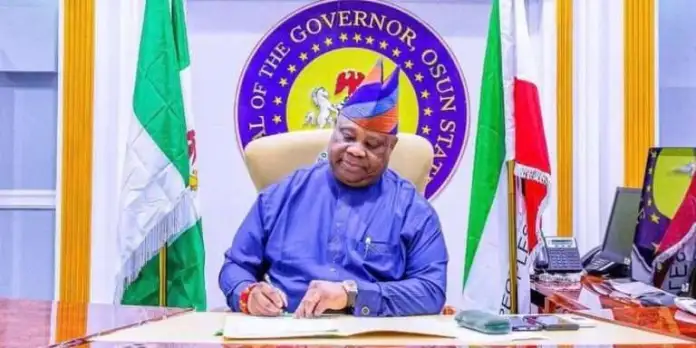


NDC zones presidential ticket to South as APC shrugs off 2027 threat

By: Abudu Olalekan
A spark lit up the scene Saturday when Nigeria’s Democratic Congress handed its 2027 presidency pick to the South – an act some see aiming straight at President Bola Tinubu’s hopes of another term.
Out of the party’s gathering in Abuja, something shifted. Still, the changes kept coming. A one-time four-year run was floated by the NDC for their future president – tied to a quiet deal: leadership heads back north by 2031. Now people whisper again about a possible alliance, pairing ex-Anambra leader Peter Obi with ex-Kano boss Rabiu Musa Kwankwaso under one banner.
Even so, the APC isn’t lying awake at night about any of it.
Later that day, the governing party brushed off the zoning debate as loud politics without real danger. At a gathering in Abuja’s Plateau Governors Lodge, where hopefuls for president, governor and senator were being reviewed, National Chairperson Nentawe Yilwatda of the APC told reporters the main clash by 2027 won’t be APC versus NDC. Instead, something else looms larger on the horizon.
The fight isn’t out there – it’s tearing through their own ranks.
From where he stands, fear makes little sense for the APC. Rival groups spend energy clashing among themselves instead of uniting against those in power. That pattern drains strength from their collective push toward future polls.
Out of the blue, Yilwatda pointed out that being seen on TV doesn’t prove power. Radio spots? Newspaper splashes? Not even close, in his view. Instead, what matters sits quietly at the finish line – votes counted after ballots are cast. Just numbers. That settles it.
Surprisingly, the PDP – though seen as the top challenger on paper – hasn’t done much better when votes are counted. What counts, he implied, sits right there in real results.
Still, the APC leader said talk of alliances doesn’t shake their ground – organization spreads wide, support stays strong, distance ahead holds through to 2027.
Standing by that stance was Hope Uzodimma, governor of Imo State and head of the Progressive Governors Forum.
From where he stands, the APC feels no pressure from the NDC’s choice on zoning. Across many states, the party’s reach speaks louder than debate. His take? The nation has made itself clear.
Still, Uzodimma wondered just how significant the NDC’s actions really are. After all, the APC holds far more ground nationwide. Its presence in nearly every corner of the nation shows people back both the party and Tinubu. Strength like that doesn’t appear without reason.
Right before that moment, inside the hall where voices echoed with agreement, the NDC made official its support for the South-bound zoning plan. A proposal brought forward by Afam Victor Ogene, elected member for Ogbaru Federal Constituency, found full approval. Not one delegate among those present from each of Nigeria’s 36 states plus FCT stood against it.
Now things look smoother for candidates from the south, particularly Obi, aiming at the party’s top spot. Meanwhile, the suggested single-term deal keeps 2031 free for someone from the north. That choice wasn’t accidental. Thought through, clearly.
Standing before the crowd, Moses Cleopas – national head of the NDC – said this event wasn’t simply another meeting. It marked, he insisted, the opening page of fresh politics: grounded in fairness, shaped by participation, driven by responsibility, aimed at progress.
Only now, after countless setbacks and pushback from powerful groups, did the NDC finally get official status – February 2026 marking that moment. Cleopas pointed out how long it took, calling it proof of stubborn effort. His view? The group formed not for show but to stand firm when others stepped back. A different kind of challenge emerged – one built on duty rather than noise.
Things are getting harder for lots of people now, he said. Hardship keeps growing, while safety shrinks day by day. Prices climb faster than paychecks do. Jobs vanish like smoke in wind. His view? Too many lives hang just above breaking point.
That instant, said Seriake Dickson – ex-governor of Bayelsa and national head of the NDC – carried weight beyond ceremony. Not just another speech at a gathering, but something sharper. A shift, he called it, deep within how Nigeria moves through its democracy. His voice rose during the event, framing what unfolded not as routine, but as pivot.
Standing before the crowd, he earned strong cheers while calling himself a tough political fighter for the opposition. The way land rules were set up, he added, shows how much the party values fair outcomes, steady compromise, and keeping the country on an even path.
What Dickson explained was this: shifting the 2027 chance southward and giving the northern region the 2031 turn aimed at easing complaints. Building stronger confidence came into play too. A steadier nation might follow, he added. More splits across groups aren’t something Nigeria should face, in his view.
Peter Obi, in his keynote address, framed the NDC as a platform for what he called national liberation.
One thing he made clear: stepping back from democracy would cost too much. Not just now – every Nigerian has a stake in real choices at the ballot box. A shift toward single-party rule? That path ends badly, he noted. When it comes to 2027, doubt about fairness might rise, yet people won’t accept shadows where light should be. Their voice, loud and firm, will demand proper elections. Thinking otherwise misses what drives this nation today.
Out of every ten people there, seven face deep struggles just to meet basic needs. A huge number of youth find little work – or none at all – despite wanting to build something stable.
He claimed Nigeria isn’t poor. Looted it was, pushed into hardship. That harm though – he believes – can unwind.
Out front at the gathering, Kwankwaso stood by the zoning plan – calling it a move that had to happen if balance and unity were ever going to take root. Then he stepped back into the quiet of the crowd.
From his point of view, handing the 2027 nomination to the South lets the area finish its cycle of leading the country – besides keeping party members more aligned. Though he didn’t say it outright, letting that region step forward could balance things better behind the scenes.
Folks heard him echo Obi’s take, pointing fingers at how things are run in Nigeria – leadership falling short, people struggling more each day. Out loud he went on about safety slipping away, families pushed from their homes, life getting tougher fast. Heavy toll on folks’ lives, that much he made clear.
Politics, Kwankwaso noted, should shift toward inclusion, not divide along faith or tribe. The NDC aims for something new – leadership that listens, instead of picking sides. Not unity as a slogan, but fairness in motion. Differences matter less when everyone has a voice. What counts is building trust across communities, step by step.
Back at the APC event in Abuja, Yilwatda also responded to speculation around Rivers State Governor Siminalayi Fubara and whether he might be shut out of the APC screening process.
He dismissed the talk, saying Fubara was not the only governor who had yet to appear. According to him, three governors were absent, and all had their reasons. As sitting governors and chief executives of their states, he said, they also have official duties that can affect their schedule.
In short, the APC says there is nothing unusual there.
But taken together, the events of Saturday show one thing clearly: the opposition is trying to position itself early, and the ruling party is already pushing back. Hard. With 2027 still some distance away, the messaging war has already begun.
Olalekan A. Abudu is a seasoned and dedicated News Journalist at REPORTERS ROOM, with over eight years of experience. He specializes in politics, climate change, health, and education, while also covering security, economic, and judicial issues. Committed to accuracy and balanced reporting, Olalekan exemplifies the principles of public-interest journalism.