



Iran peace terms: Trump rejects deal as oil prices jump
By: Abudu Olalekan
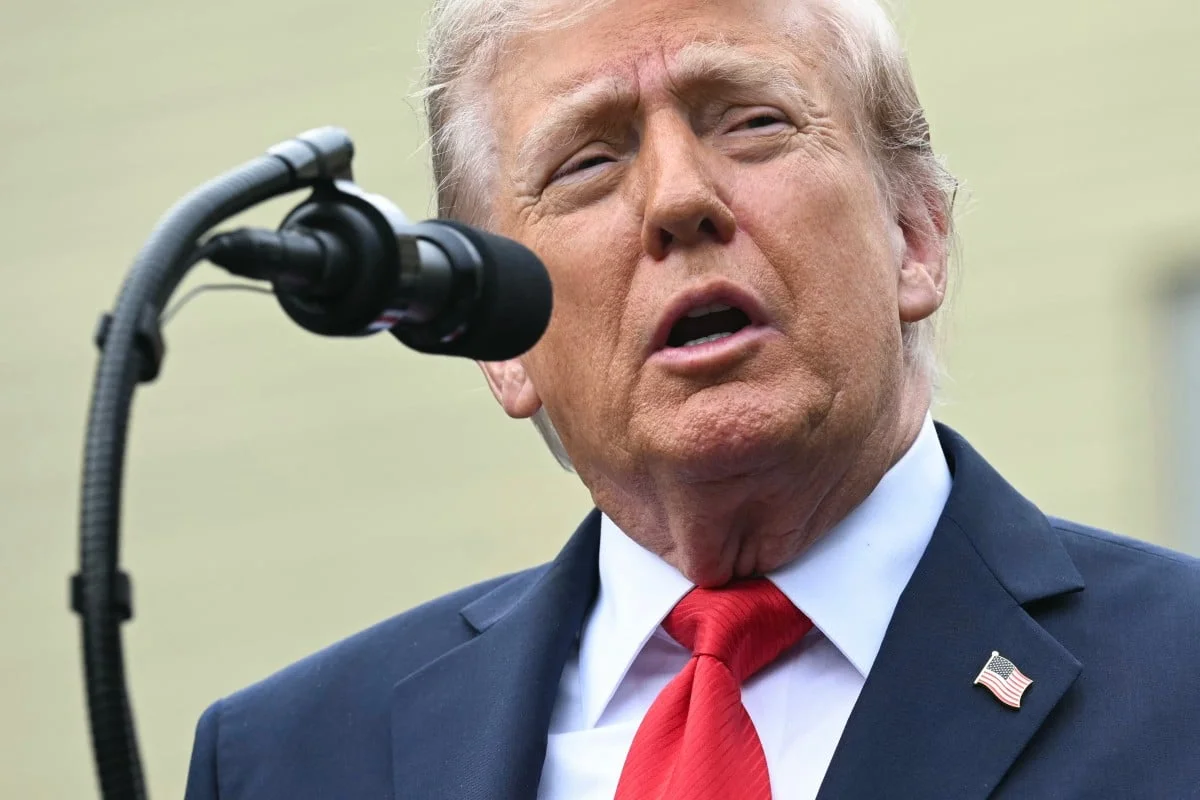
President Donald Trump has flat-out rejected Iran’s conditions for ending the war in the Middle East, calling Tehran’s response “totally unacceptable.” And almost immediately, the oil market flinched. Prices shot up in early Asian trading on Monday.
Iran, for its part, had responded on Sunday to Washington’s latest peace push, but with warnings attached. Tehran said it wouldn’t hesitate to hit back if the US launched new strikes, and it also signaled it doesn’t want more foreign warships cruising through the Strait of Hormuz.
Trump didn’t share the fine print of Iran’s counter-offer. He didn’t need to, really. He posted on Truth Social and made it clear the answer was no.
“I have just read the response from Iran’s so-called ‘Representatives.’ I don’t like it — TOTALLY UNACCEPTABLE!” he wrote.
That stalemate spooked energy traders. Brent crude climbed 4.65% to $99.95 a barrel in Monday morning trade in Asia. US benchmark West Texas Intermediate (WTI) also jumped—up a little over 4% to $105.5 a barrel—as investors priced in the risk of more disruption around Hormuz, where Iran has imposed a partial blockade.
Meanwhile, Israeli Prime Minister Benjamin Netanyahu is not pretending the war is about to wrap up. He said it won’t end until Iran’s nuclear sites are dismantled and its nuclear material is removed.
“It’s not over, because there’s still nuclear material — enriched uranium — that has to be taken out of Iran. There are still enrichment sites that have to be dismantled,” Netanyahu said on CBS’s 60 Minutes.
Tehran has kept its chin up publicly, even as talks drag on.
“We will never bow down to the enemy, and if there is talk of dialogue or negotiation, it does not mean surrender or retreat,” Iranian President Masoud Pezeshkian posted on X on Sunday.
Iran’s state broadcaster IRIB said Tehran’s message—sent through Pakistani mediators—focused on ending the war “on all fronts, especially Lebanon,” where Israel is still fighting Iran-backed Hezbollah, and also on “ensuring shipping security.” Details were thin, though. Reports suggest the US plan was looking at extending a Gulf truce to create space for broader talks on the conflict and Iran’s nuclear programme.
A senior US official also said Trump is expected to raise Iran with China’s President Xi Jinping in Beijing on Thursday. China is a major buyer of Iranian oil, so that conversation matters.
What Iran reportedly offered — and why it’s messy
The Wall Street Journal, citing people familiar with the back-and-forth, reported that Iran’s counter-proposal included the idea of diluting some highly enriched uranium and sending the rest to a third country.
But Iran reportedly wanted guarantees. If talks collapse, or if Washington walks away later, Tehran wanted that uranium returned. That’s the kind of condition that can stall everything, fast.
Hormuz is the pressure point
With no clear route to a deal, attention has swung back to the Strait of Hormuz—because that’s where the world’s oil nerves live. Iran is restricting maritime traffic there and has even set up a payment system to charge tolls for ships crossing.
US officials have said it would be “unacceptable” for Iran to control the waterway, which carries roughly a fifth of the world’s oil. The US Navy is also blockading Iranian ports, sometimes diverting or disabling ships going in and out.
Britain and France are sending vessels to the region and pushing for an international coalition to secure the strait—after a peace deal, they say. They’re also hosting a defense ministers’ meeting on Tuesday with officials from more than 40 countries to talk through plans to restore trade flow through Hormuz.
But France’s President Emmanuel Macron tried to cool things down, saying France had “never envisaged” a naval deployment in Hormuz. Instead, he described it as a security mission that would be “coordinated with Iran.” That came after Tehran warned France and Britain they’d face a “decisive and immediate response” if their ships showed up in the strait.
Drones, threats, and a shaky ceasefire
On Sunday, fresh drone incidents rattled what’s left of the ceasefire.
The UAE said it intercepted a drone attack launched from Iran. Kuwait reported “hostile drones” in its airspace. Qatar’s defense ministry also said a freighter entering its waters from Abu Dhabi was hit by a drone.
And then came the warning from inside Iran’s parliament. In a social media post Sunday, Ebrahim Rezaei, spokesman for the Iranian parliament’s national security commission, said: “Our restraint is over as of today.”
“Any attack on our vessels will trigger a strong and decisive Iranian response against American ships and bases,” he added.

Olalekan A. Abudu is a seasoned and dedicated News Journalist at REPORTERS ROOM, with over eight years of experience. He specializes in politics, climate change, health, and education, while also covering security, economic, and judicial issues. Committed to accuracy and balanced reporting, Olalekan exemplifies the principles of public-interest journalism.

