



UNCCD COP17 Opens in Mongolia With Urgent Call for Land Restoration
By: Abudu Olalekan
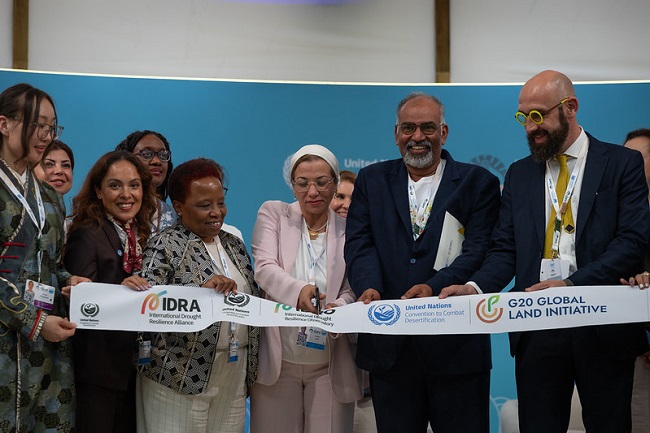
Ulaanbaatar, Mongolia — August 17, 2026: Delegates from 196 countries and the European Union have gathered in Ulaanbaatar for the opening of the 17th Conference of the Parties to the United Nations Convention to Combat Desertification, known as UNCCD COP17.
The two-week conference will focus on a challenge that is becoming harder to ignore: how to restore damaged land and help communities withstand worsening drought.
Governments, financial institutions, businesses, scientists and civil society groups are expected to work on practical solutions, build new partnerships and mobilise investment. Negotiations will cover drought, rangelands, agricultural land, soil health, resource mobilisation, private-sector involvement and the future direction of the Convention.
The decisions reached in Mongolia could shape international cooperation on land restoration and drought resilience for years to come. Countries are already under growing pressure from land degradation, water shortages and climate change.
Land degradation and drought are estimated to cost the global economy almost $900 billion each year. They affect up to 40 per cent of the world’s land and the lives of about 3.2 billion people. Droughts have increased by nearly one-third since 2000, causing annual losses of at least $300 billion.
COP17 is also the first of the three Rio Convention conferences taking place in 2026. It comes ahead of the biodiversity and climate conferences, creating an opportunity for stronger cooperation on land degradation, biodiversity loss, climate change, food security and water resilience.
Mongolia’s growing land crisis
For Mongolia, the discussions are far from abstract.
Nearly 77 per cent of the country’s land is degraded, while pastoralism supports the livelihoods of roughly one in three Mongolians. In 2023 and 2024, severe summer drought followed by harsh dzud winters led to the loss of more than seven million livestock.
The crisis exposed the vulnerability of pastoral communities and showed why stronger preparation is urgently needed.
Stronger action on drought resilience
Building on the progress made at COP16 in Riyadh, governments will continue working on a global policy framework for drought. They will also examine the tools, partnerships and financing systems needed to turn national drought plans into real action.
The discussions are expected to cover early-warning systems, drought preparedness, vulnerability assessments and international cooperation.
More than 70 countries have now developed national drought plans. In 2013, only three countries had done so. The change reflects a growing understanding that drought cannot be tackled only after it has become a humanitarian or economic emergency.
Investment can make a major difference. Every dollar spent on drought resilience can deliver returns of up to $10, while some nature-based solutions provide benefits worth as much as 27 times their cost.
COP17 will also highlight new tools and partnerships, including initiatives linked to the Riyadh Global Drought Resilience Partnership, the Drought Resilience Investment Facility and the International Drought Resilience Observatory.
Closing the land restoration finance gap
Finance will be one of the main issues at the conference.
An estimated $355 billion is needed every year to address land degradation and drought. Current investment, however, is only about $77 billion, leaving an annual gap of approximately $278 billion.
The private sector currently contributes around six per cent of global finance for land restoration and drought resilience, despite its dependence on healthy land and reliable water supplies. Public funding alone will not be enough to close the shortfall.
COP17 will explore ways to attract new sources of capital, reduce investment risks and create stronger incentives for sustainable land management. It will also consider how public and private funding can be better aligned with restoration and resilience goals.
The conference is expected to showcase progress on initiatives such as Business4Land, which seeks to deepen private-sector participation in land restoration and drought resilience.
The Business for Land Forum, scheduled for August 24, will bring governments, companies and investors together to discuss practical ways to increase investment in regenerative landscapes.
Organisations involved in the Action Agenda on Regenerative Landscapes have already committed more than $9 billion across more than 210 million hectares. New policy recommendations aimed at unlocking further investment will also be presented during COP17.
Rangelands move to the centre of discussions
COP17 is being held during the International Year of Rangelands and Pastoralists, placing one of the world’s largest but often overlooked ecosystems firmly on the global agenda.
Rangelands cover about 54 per cent of the Earth’s land surface and support around two billion people. They are also home to approximately 500 million pastoralists who have managed and protected these landscapes for thousands of years.
These areas provide one-sixth of the world’s food and around 70 per cent of livestock feed. They are much more than grazing land. Rangelands support food security, biodiversity, climate resilience and millions of livelihoods.
But the pressure is rising. Up to half of the world’s rangelands are degraded or at risk. About 78 per cent are located in drylands, where drought, climate change and unsustainable land use are putting communities and ecosystems under increasing strain.
Governments are expected to consider a new policy framework on rangelands and pastoralists. They may also launch the Rangelands Flagship Initiative, a global partnership designed to increase long-term investment in sustainable rangeland management and strengthen pastoral livelihoods.
Silk Road Caravan arrives in Mongolia
The opening of COP17 also marks the conclusion of the UNCCD Silk Road Caravan, a multi-country journey across Eurasia.
The Caravan brought together governments, scientists, pastoralists, local communities and young people to exchange knowledge and highlight practical approaches to land restoration, sustainable rangeland management and drought resilience.
Travelling along the historic Silk Road, it visited restoration projects and pastoral communities. The journey highlighted the people doing the difficult work of restoring degraded land, often with limited resources.
Its arrival in Mongolia connects local experience with the global negotiations taking place in Ulaanbaatar. It is also one of the flagship initiatives of the International Year of Rangelands and Pastoralists.
Beyond drought and rangelands, delegates will discuss the Convention’s future strategic framework, scientific guidance on agricultural land and soils, and increased participation by Indigenous Peoples, local communities, women, young people and civil society.
They will also examine stronger cooperation with the biodiversity and climate conventions.
From negotiations to action
Alongside the formal talks, the COP17 Action Agenda will bring together governments, international organisations, financial institutions, businesses, scientists, civil society groups, Indigenous Peoples, pastoralists, local communities, women and youth.
The aim is straightforward: share workable solutions, launch new initiatives and build partnerships that can move from conference rooms to communities.
Four thematic days will connect the negotiations with high-level discussions and practical action:
- Finance Day — August 24: Mobilising public and private investment for land restoration and drought resilience.
- Water Day — August 25: Strengthening drought resilience and cooperation on the relationship between land and water.
- Land and People Day — August 26: Highlighting the role of pastoralists, Indigenous Peoples, local communities, women and youth.
- Food Systems and Soil Health Day — August 27: Promoting healthy soils and sustainable food systems to improve food security and livelihoods.
The high-level segment will include ministerial discussions and special events focused on drought resilience, sustainable rangelands, land restoration finance, food systems, soil health, migration, security, sand and dust storms, and private-sector engagement.
COP17 will also host the first formal meetings of the UNCCD Indigenous Peoples Caucus and Local Communities Caucus. Other events include the Business4Land Forum, Youth Forum and Gender Caucus, as well as forums for parliamentarians and mayors.
Several major scientific and policy reports are scheduled for release during the conference:
- August 24: The Economics of Rangelands Restoration
- August 25: The Drying Planet: Drought in Numbers 2026
- August 26: Global Land Outlook for Small Island Developing States
- August 26: Global Land Outlook Central Asia Thematic Report
- August 27: Soil Health: The Business Case for Investing in Our Foundation
COP17 is expected to conclude on August 28, when Parties will adopt decisions guiding the Convention’s work over the coming years.
The bigger test, however, will come after the conference. The world already knows the scale of the problem. What matters now is whether the agreements made in Ulaanbaatar can deliver lasting action on the ground.

Olalekan A. Abudu is a seasoned and dedicated News Journalist at REPORTERS ROOM, with over eight years of experience. He specializes in politics, climate change, health, and education, while also covering security, economic, and judicial issues. Committed to accuracy and balanced reporting, Olalekan exemplifies the principles of public-interest journalism.
