


Climate action: What a classroom in Enugu taught me about climate change
By: Obetta Victory Chinaza, Climate Champion & Sustainable Development Advocate
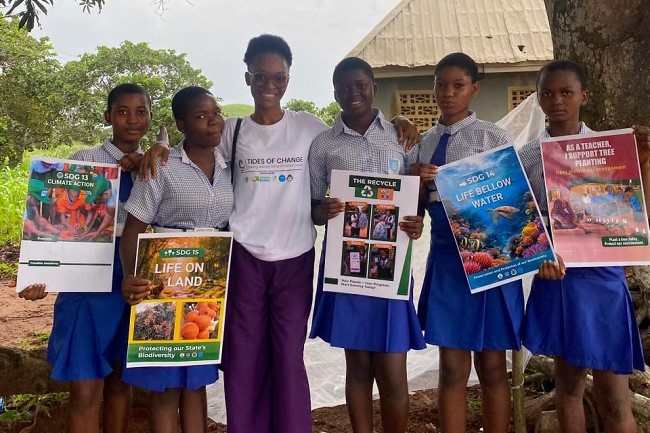
I went to Iheaka Girls Secondary School in Enugu State to teach.
That was the plan.
We’d called it “Rooted in Action: Growing a Green Generation”.
On paper, it was pretty simple – tell them what climate change is, why it’s happening. Then plant some trees, build a recycling point, teach them how to turn trash into wealth, and set up an Eco Club that would still be running long after we’d left.
Easy.
Except the second I walked into that classroom, I knew I’d got it backwards.
I thought I’d come to teach them.
Turns out, most of them already knew.
They weren’t just listening. They were nodding. Connecting the dots.
Honestly, it felt like I was telling a story they’d heard a hundred times before – just without the words “climate change”.
We make that mistake far too often.
Young people don’t always have the scientific terms, or know how to phrase it in policy speak. But they’ve felt it. The heat that’s gotten worse year after year. Seasons that don’t quite follow the pattern they remember from growing up. The kind of changes you notice, because it affects your everyday life.

I’d barely even finished introducing the topic before I realised – I was learning way more than I was teaching.
There was one girl in particular though. I’ve not been able to forget her.
She told me about the flood that tore through her neighbourhood a few years back.
It wasn’t just water on the road. Homes were damaged. Families lost property. Eventually, her own family had to leave and find somewhere else to stay.
For her, climate change wasn’t some abstract thing from a dusty textbook.
It was grief. Still raw, sitting just beneath the surface.
That one story changed everything for me.
We weren’t introducing them to climate change – we were giving them words for something they’d already survived.
But it didn’t stop there.
These girls got stuck in.
They took old, discarded materials and turned them into something useful – their very own trash-to-treasure project. Suddenly, waste wasn’t ‘rubbish’. It was a resource. Something you could actually turn into wealth.
My favourite part though, had to be the tree planting.
There was something brilliant about watching those girls dig, plant, and name the trees they’d put in the ground.
By the time we were done, I’d say most of those students knew more about climate change – it’s causes, and it’s very real, local effects – than plenty of adults I’ve met.
Truth be told, it was a wholesome experience for all of us. The students, the staff, and definitely for me.
But that same experience also showed me a glaring gap.
Climate education simply isn’t a standalone subject in most Nigerian schools. It’s crammed into Geography, tucked into Biology, or vaguely mentioned in Social Studies.
The problem is, when you squeeze it into other subjects like that, important details fall through the cracks. Bit by bit.
Which is exactly why the Nigerian education system needs to recognise climate education for what it is – a subject in it’s own right. Not an afterthought.
That means proper investment: in the curriculum, in teacher training, and in the learning resources to actually teach it well.
Because when we do that, we’re not just teaching facts. We’re equipping young people to understand the climate crisis, and more importantly, to lead the way towards a more sustainable future.
At the end of the day, we don’t need to convince this generation that climate change matters.
Most of them already know it does. They’ve lived it.
The real challenge is for us to actually trust them.
To give them the knowledge. The platform. The opportunity. And yes, the responsibility to act.
My time at Iheaka Girls’ Secondary School proved, beyond doubt, just what becomes possible when we do that.

Olalekan A. Abudu is a seasoned and dedicated News Journalist at REPORTERS ROOM, with over eight years of experience. He specializes in politics, climate change, health, and education, while also covering security, economic, and judicial issues. Committed to accuracy and balanced reporting, Olalekan exemplifies the principles of public-interest journalism.