



Climate-Smart Farming Takes Root in Adamawa as Foundation Wraps Up Erosion Control Project
By: Abudu Olalekan
For farmers in Gella community, Mubi South Local Government Area of Adamawa State, the last twelve months have looked a little different. New crops. New techniques. And for the first time, solar panels pumping water onto farmland instead of just sitting on rooftops.
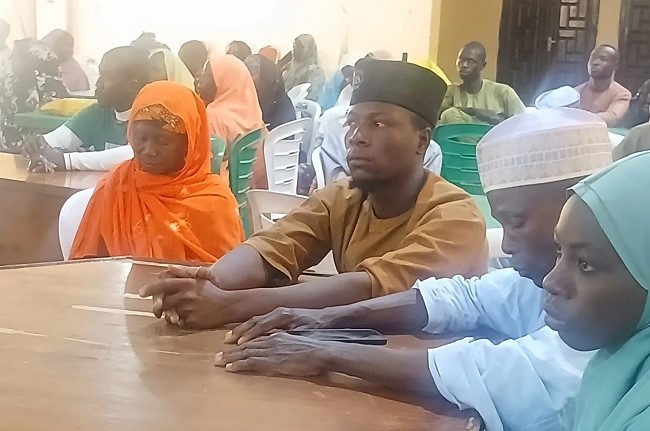
That’s the kind of shift the Alimat Care Foundation has been quietly driving through a pilot project funded by the United Nations Development Programme’s Global Environment Facility Small Grants Programme. The project — titled “Indigenous Erosion Control Through Climate-Smart Agricultural Practices” — officially came to a close on Monday at a Knowledge Management and Project Close-out workshop held in Mubi South.
And the results? Worth talking about.
What the Project Actually Did
Speaking at the workshop, ACF Executive Director Ibrahim Bello explained that the whole idea was pretty straightforward. Soil erosion had been eating away at farmland in Gella for years. Crop yields were dropping. Farmers were putting in the work but getting less and less back. Something had to change.
So the foundation introduced vetiver grass to stabilise areas that were most vulnerable to erosion. If you’re not familiar with vetiver, it’s a tough, deep-rooted grass that basically acts like a natural barrier — holding soil in place and improving resilience over time. Simple, but effective.
But they didn’t stop there. The project also rolled out solar-powered irrigation systems to support dry-season farming. Beneficiaries got hands-on experience cultivating rice, wheat, cucumber and soybeans using solar-powered water pumps provided under the programme. That’s a big deal in a community where farming has traditionally been rain-dependent.
Bello was honest about one thing though — a single year isn’t enough to see the full picture.
“The impact of the intervention cannot be fully realised within one year,” he said, adding that ACF would continue working with the community beyond the project period to strengthen food security and support local climate action.
That kind of long-term commitment matters. A lot of these projects wrap up and everyone moves on. It sounds like ACF is trying not to do that.
The Problem Was Clear From the Start
ACF Programme Lead Yanasim Dagal gave some useful context on how the project came together in the first place. It wasn’t designed in some faraway office. The foundation actually conducted climate risk and needs assessments with community members before anything was implemented.
What they found wasn’t surprising, but it was serious. Land degradation and soil erosion were the biggest threats to agricultural productivity in Gella. Farmers had been watching their harvests shrink year after year despite doing everything they normally would.
Dagal believes restoring degraded land and improving soil conservation is the path forward — not just for Gella, but for communities like it across the region.
She also had a message for those in positions of power. Governments, development partners, civil society groups — they all need to invest more in climate-smart agriculture and community capacity building. And residents themselves, she urged, should avoid practices that make environmental degradation worse.
Fair point on both counts.
What the Farmers Are Saying
The best measure of any project like this isn’t what the organisers say. It’s what the people on the ground think.
Michael Vandi, one of the beneficiaries, thanked the foundation for giving farmers practical, usable knowledge — not just theory. He said participants learnt how to plant vetiver grass and grow wheat, rice and soybeans during the dry season. That’s skills they can carry forward, project or no project.
Then there’s Hauwa Haruna, whose reaction was probably the most telling.
“Before now, I only knew solar panels were used on rooftops,” she said. “I never imagined they could pump water for irrigation on farms.”
That moment of realisation — when something you thought was one thing turns out to be something much bigger — that’s what good development work looks like. It shifts how people see what’s possible.
It’s one community. One pilot project. But if the knowledge sticks and the foundation follows through on its promise to stay engaged, Gella could end up being a model for how to do this right.

Olalekan A. Abudu is a seasoned and dedicated News Journalist at REPORTERS ROOM, with over eight years of experience. He specializes in politics, climate change, health, and education, while also covering security, economic, and judicial issues. Committed to accuracy and balanced reporting, Olalekan exemplifies the principles of public-interest journalism.
