


Fake Agency: Reps Panel Clears Gbajabiamila Of Any Involvement
By: Abudu Olalekan
For a while, there were claims making the rounds about a so-called “Presidential Foreign Intervention Promotion Council” — a fake agency that had somehow found its way into Nigeria’s 2026 Federal Government budget.
And for a moment, fingers were pointing in the direction of the Chief of Staff to the President, Femi Gbajabiamila.
Now, that may not be the case after all.
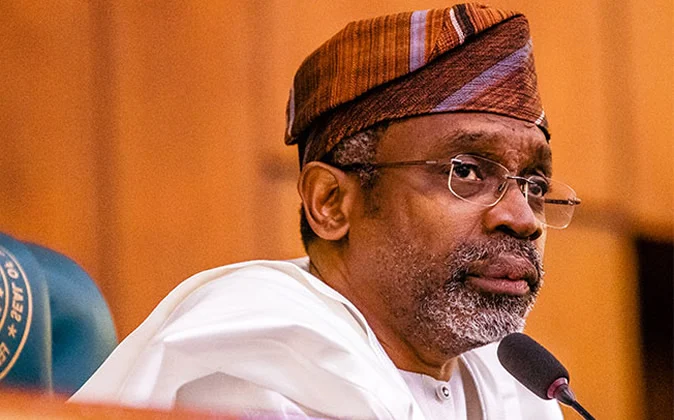
The House of Representatives Ad Hoc Committee probing the matter has cleared Gbajabiamila of any involvement in the outfit’s activities. According to its preliminary findings, there was no evidence he approved, established or took part in running it in any way.
The committee’s chairman, Yusuf Gagdi, made this known on Wednesday while presenting the panel’s findings at a press briefing aired on TVC.
From the documents it reviewed, the panel said Gbajabiamila had actually done the opposite. As soon as concerns about the organisation were brought to his attention — first raised by the Nigerian Investment Promotion Commission over suspected fraud and the misuse of institutional materials — he wasted no time alerting the right authorities.
Within a day, he had contacted the Nigeria Police Force, the Office of the National Security Adviser, the Department of State Services (DSS) and the Economic and Financial Crimes Commission (EFCC). He also directed that relevant government institutions carry out administrative verification on the matter.
When more concerns came up later, including those around a proposed world investment summit, the panel noted that he sent out further correspondences, pushing for proper investigation and action to be taken.
“The documentary evidence presently before the Committee does not establish that the Chief of Staff authorised, approved, established or participated in the activities of the purported organisation,” the panel stated.
“On the contrary, the evidence demonstrates repeated steps to secure investigation, institutional verification and appropriate administrative action.”
Based on those actions, the lawmakers commended Gbajabiamila, at least on a preliminary basis, for the prompt security and administrative steps he took whenever the issue was brought to him.
Forged Letter, Fake Order And A Non-Existent Law
Digging further, the committee established that the letter purportedly appointing Prince Adeniyi Adeyemi as Director-General of the council was outrightly forged — and falsely attributed to the Presidency.
It found that Gbajabiamila neither issued nor signed that appointment letter. State House records also showed it was not written on any authentic State House letterhead, while its reference number did not follow the official system at all.
The panel didn’t stop there. It also dismissed two other key documents that had been brandished to give the outfit a cloak of legitimacy.
One was a document titled Executive Order No. 5, dated February 24, 2026. The committee said it was never issued or approved through any lawful process of the Presidency.
The other was a purported Act of the National Assembly said to have established the council. That too, turned out to be false. It was never passed by both chambers, never assented to by the President, and was never gazetted as an Act of the Federation.
In fact, part of an instrument belonging to another institution appeared to have been electronically altered, mutilated or substituted in a bid to make it look like the National Assembly had backed the council.
All in all, the lawmakers said their investigation found no valid law, executive order, administrative instrument or any lawful authority whatsoever to establish an institution known as the “Presidential Foreign Intervention Promotion Council.”
Trail Of Bank Accounts Under Probe
The committee also revealed that preliminary financial checks had linked about 58 bank accounts to identifying details associated with Adeyemi, who had been parading himself as the council’s Director-General.
He had gone as far as claiming he was appointed by Gbajabiamila, while also making a number of allegations involving funds and the council’s operations. That was what first stirred public suspicion, prompting Gbajabiamila to publicly deny any link to the outfit.
The controversy only deepened from there. As investigations into the fake council widened, the Independent Corrupt Practices and Other Related Offences Commission (ICPC) uncovered yet another alleged fake government agency — the National Brands Development and Made-in-Nigeria Special Project Office.
It all left many wondering just how such outfits were able to operate, let alone attempt to creep into government structures and budgetary allocations.
For now though, the House panel’s preliminary findings have exonerated the President’s Chief of Staff. It insists he was the one who raised the alarm, not the one behind it.

Olalekan A. Abudu is a seasoned and dedicated News Journalist at REPORTERS ROOM, with over eight years of experience. He specializes in politics, climate change, health, and education, while also covering security, economic, and judicial issues. Committed to accuracy and balanced reporting, Olalekan exemplifies the principles of public-interest journalism.