


Justice Crack Freed From DSS Detention After Nearly Four Weeks
By: Abudu Olalekan
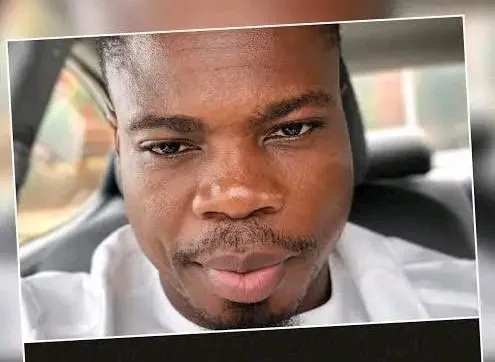
Human rights activist and blogger Justice Mark Chidiebere, popularly called Justice Crack, is finally back free.
He has regained freedom from the Department of State Services (DSS) after spending nearly four weeks in detention.
It was Omoyele Sowore who broke the news. The fiery human rights activist and former presidential candidate posted the update on X on Thursday night.
Sowore didn’t mince words. According to him, Justice Crack’s detention was wrong—unjust, even.
“Justice Crack is out now. He is finally free from the unjust detention imposed by the lawless Department of State Services (DSS).” Sowore wrote.
He added: “This victory belongs to all who spoke out, resisted intimidation, and demanded justice.”
Earlier, Reportersroom had reported concerns Sowore raised. He said the DSS may have been doing things to delay Justice Crack’s release, even after he had met most of his bail conditions.
Justice Crack had also accused the DSS of deliberately frustrating the process by withholding his international passport, which, he said, could complicate the final steps needed for his release.
The matter was before the Federal High Court in Abuja, where on May 18, 2026, the court granted Chidiebere bail of N5 million, with one surety in a like sum.
Now, the conditions were strict.
When Justice Joyce Abdulmalik ruled on the bail application, she ordered that the surety must live within the court’s jurisdiction. The surety must also have kept a fixed residential address for at least four years.
The court also said the surety must prove residence by submitting documents such as either a tenancy agreement or a certificate of occupancy to the court registry.
On top of that, the surety must be a federal civil servant not below Grade Level 15. The court also required evidence of at least three months’ salary payments, a letter of authentication from the person’s immediate head of department, and proof of pensionable employment.
Justice Abdulmalik further directed the surety to depose to an affidavit of means, and to submit a recent passport photograph to the court.
Also, Chidiebere himself was ordered to deposit his passport with the court as part of the bail conditions.
Justice Crack’s family members and supporters said his ordeal started after he publicly criticised the military. They said he spoke out about the alleged extrajudicial killing of a civilian, and also highlighted the poor welfare of rank-and-file soldiers.
In a viral video, a woman identified as a relative of Justice Crack described what he went through in emotional terms.
She alleged he was tied to a tree and left there for about 72 hours, simply because he spoke for oppressed Nigerians.
Instead of addressing the torture allegations directly, the military reportedly transferred him to the DSS for prosecution. That move raised questions about accountability in Nigeria’s security system.
The relative also alleged that Justice Crack became a target after he exposed the “brutal murder” of a civilian by soldiers, and spoke up for the “impoverished” soldiers who, according to her, have been abandoned by the military leadership.
She said: “When are we going to finally fight for our voice? We don’t have a voice anymore. Nothing is working well in the country, and it can be anybody tomorrow.”
The Nigerian Army had also confirmed Justice Crack’s arrest. In its explanation, the army claimed he tried to incite soldiers and plotted “subversion” against the military high command.
The clarification followed widespread public backlash. It came after reports that Justice Crack was abducted and tortured—chain to a tree under the hot sun for more than 72 hours.
According to the army, Justice Crack’s interactions with soldiers went beyond whistleblowing. The army alleged he was “cultivating vulnerable personnel” to create discontent inside the ranks.
“While the matter is being investigated for breach of the Armed Forces’ Social Media Policy and an attempt to misinform the public, preliminary report reveals that the soldiers discussed a wide range of issues with Justice Chidiebere, who seemed to be inciting soldiers to create discontent within the system. An example was a chat bothering on subversion which Chidiebere had with the soldiers,” the army said.
The army also argued that such actions by civilians can have “far-reaching implications on discipline and national security,” which it used as justification for intercepting the blogger.

Olalekan A. Abudu is a seasoned and dedicated News Journalist at REPORTERS ROOM, with over eight years of experience. He specializes in politics, climate change, health, and education, while also covering security, economic, and judicial issues. Committed to accuracy and balanced reporting, Olalekan exemplifies the principles of public-interest journalism.