


Trump immigration crackdown: US Army sergeant’s wife deported to Honduras
By: Abudu Olalekan
A routine family trip to Walmart ended with immigration agents taking Cristy Maryori Villafranca-Trejo into custody while her six-year-old daughter sat in the car.
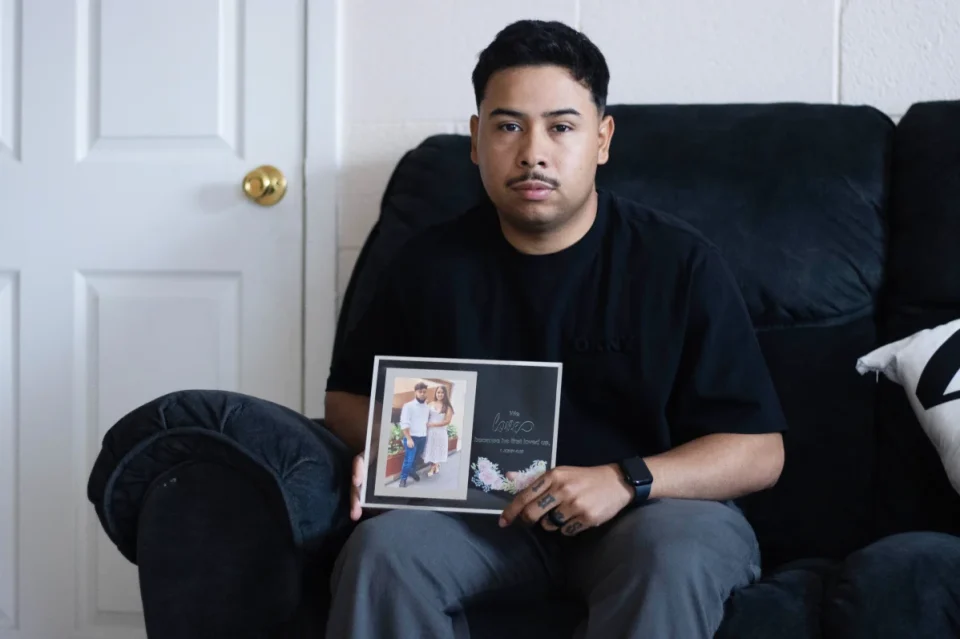
That was on July 11, outside a store near Fort Bliss, Texas. Villafranca-Trejo has since been deported to Honduras, leaving her husband, Army Sgt. Hedar Leonel Turcios Juarez, to care for their daughter while continuing his military service.
Turcios Juarez, who is stationed at Fort Bliss, told Military Times that he spoke with his wife after her deportation.
“She is okay,” he said.
The couple have been legally married since 2022. Since his wife’s detention, Turcios Juarez has had to rearrange nearly every part of his daily life. Instead of attending morning training, he takes their daughter to first grade. He has also postponed a planned assignment at another military base.
Now, he’s not sure what comes next.
He told The Associated Press that he still has to meet his military obligations, but he also needs to make sure his daughter is cared for. Trying to do both without his wife has left him questioning whether he can remain in the Army.
Military Times reported that Villafranca-Trejo was listed as a dependent in the Army’s personnel system. Her name also appeared on her husband’s upcoming orders for a move to Oklahoma.
According to the AP, she is at least the seventh spouse or parent of an active-duty US service member to be deported under President Donald Trump’s immigration crackdown.
Villafranca-Trejo entered the United States from Honduras in 2016, when she was 18. Her husband said she came in search of “a better life.” The pair met in 2018, and she has no known criminal record, according to the AP.
The Department of Homeland Security said she received due process before being removed from the country. DHS said an immigration judge issued a final deportation order in 2017 after she failed to attend a scheduled hearing.
Her husband tells a different side of the story. He said Villafranca-Trejo never received notice of that hearing and had no idea a deportation order existed until the couple applied for her green card after their marriage.
Military Times reported that they began another immigration application process in 2024 and were working with a lawyer to challenge the removal order.
Her attorney said a motion to reopen the case was rejected in May. An appeal before the Board of Immigration Appeals was still pending when she was deported.
Villafranca-Trejo had also waited about a year for a decision on her military parole-in-place application. The programme can allow certain immediate relatives of US service members to remain in the country while seeking permanent legal status.
“We were following the rules — we did everything we could on our side to fix this problem,” Turcios Juarez told the AP.
Before Trump returned to office, immigration officials would generally allow immediate relatives of service members to resolve their legal status, even when an old removal order existed, according to Dan Gividen, a former ICE deputy chief counsel.
Gividen, who served in that role from 2016 to 2019, said authorities would not normally detain and deport the spouse of an active-duty soldier when that person could qualify for a green card through the marriage.
Villafranca-Trejo was held at the Camp East Montana detention facility in Texas following her arrest. US Rep. Veronica Escobar later opened a congressional inquiry into the case and visited her at the facility, according to spokesperson JP Caballero.
Escobar said the family should have been supported, not torn apart.
“My heart breaks for her, her children and the soldier who must feel so betrayed by the country he is sacrificing for,” she said in a statement to the AP.
The AP has identified more than 50 cases involving parents or spouses of active-duty service members who were placed in federal immigration detention after the Trump administration rolled back protections for military families.
An earlier AP review found that at least six had been deported. Villafranca-Trejo’s removal brings the reported number to at least seven. In some cases, detained military relatives were released after news coverage and intervention from members of Congress.
Turcios Juarez is originally from Honduras. He enlisted in the Army in 2022 and became a US citizen two years later.
He still wants to serve. But with his wife gone, he has no clear plan for balancing military life with raising their daughter alone. He also hasn’t figured out how to explain to the child why her mother was taken away.
“I love what I do, I want to keep doing this,” he said. “I just don’t know how I am going to keep doing this.”

Olalekan A. Abudu is a seasoned and dedicated News Journalist at REPORTERS ROOM, with over eight years of experience. He specializes in politics, climate change, health, and education, while also covering security, economic, and judicial issues. Committed to accuracy and balanced reporting, Olalekan exemplifies the principles of public-interest journalism.