


World Environment Day: School to Plant 4,000 Trees Across Abuja
By: Abudu Olalekan
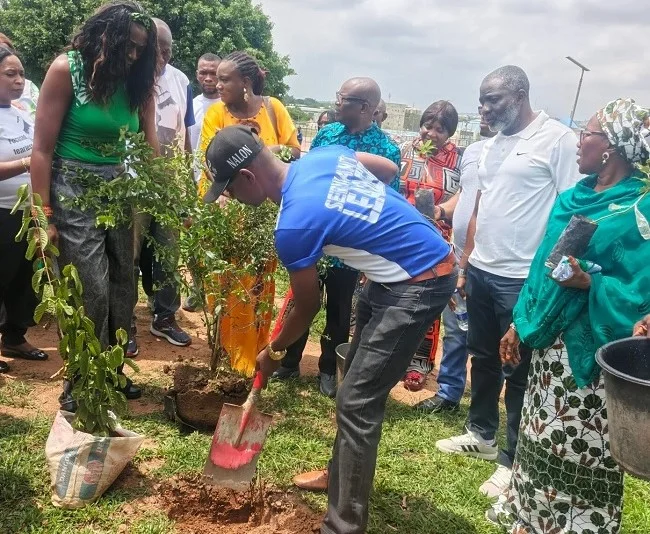
Around 100 students gathered under a dusty sky, each holding small saplings like quiet promises. Though concrete spreads fast here, roots are starting to push back in patches near classrooms. Instead of waiting for big plans, kids dig holes with hands and shared shovels. Heat still beats down most afternoons, yet shade now stretches wider than it did last year. While others debate policies, these young ones drop seeds into cracked soil every Friday morning. Growth comes slow, but leaves multiply when nobody’s watching.
Starting now, the World of Faith Group of Schools plans to grow 4,000 rare tree species in various areas of the Federal Capital Territory. This move ties into events lined up for 2026 World Environment Day. Not by force but through steady effort, green goals are taking root across neighborhoods. While some watch, others dig soil with quiet determination. Each sapling stands where concrete once ruled. Because change begins small, it spreads unseen at first. Still, branches reach further every season.
This effort goes beyond making the city look nicer. Not even close.
What if cities could adapt better? That thought drives the project shaping up in Abuja, where local efforts now meet long-term survival. Instead of waiting, people are stepping forward, treating nature like something that matters. Resilience isn’t just a goal – it shows up in small choices, repeated every day. One step at a time, awareness grows, rooted not in speeches but actions.
On Thursday in Abuja, at the event launch, Mrs. Daisy Idahosa – head of WOFGOS – explained planting trees fits into a broader push toward greener cities, given how climate effects are deepening. While speaking, she linked each sapling to long-term shifts people can see, feel, act on. Her point landed quietly: small steps shape air, shade, future health.
A collaboration led by the United Nations Information Centre shapes this effort, bringing together multiple partners around a shared focus. Running beneath it all is the idea of cities adapting to shifting climate patterns while holding on to long-term stability. Each group involved adds its own piece without needing spotlight. The central thread stays clear – urban growth must find balance amid environmental pressures, avoiding old traps. What stands out is how quietly these pieces fit, not shouting progress but building it steadily
Out in Abuja, trees are going into schools, open areas, then chosen neighborhoods – all thanks to Idahosa’s plan. Simple idea here. More greenery takes root. Spaces start feeling less hot. Rising heat in cities? That begins to ease, bit by bit.
“These trees will help create natural cooling zones across the city,” she said.
Not waiting anymore is the point, she said, when talking about this year’s World Environment Day slogan – “Inspired by Nature, for Climate, for Our Future.” The phrase hits hard now, pushing us past delay into motion.
What once felt like an extra now feels essential to Idahosa. Open patches of nature shift from bonus to basic need.
Out of nowhere, she pushed locals to step up when it came to protecting the environment, framing green fixes as something today’s people must build so tomorrow’s won’t struggle. While talking, she tied community action directly to long-term survival, stressing that hands-on care now shapes what kids inherit later.
Hope shines through when young people take charge. Their energy caught attention, not just effort. A staff member noticed how they guided projects tied to climate care. Excitement bubbled in every session they ran. That spark feels like what change looks like. What matters grows where passion leads.
Maybe that stood out more than anything else. Hands deep in soil, youth stepped up. Not just watching – doing. Actually digging. Could’ve been messy, sure. Yet there it was, real work in motion.
From the stage, Mr. Ronald Kayanja – who leads the United Nations Information Centre – sounded a warning: Earth’s heat is climbing faster than expected.
Out came his words, straight to the point.
“The time to act is now.”
Looking at things one by one, city tree projects might seem tiny. Yet, when put together, they add up fast – Kayanja says these efforts matter more than they first look. Their power grows not from size, but how often they repeat across places.
From small islands to vast inland regions, richer nations must step up as promised when it comes to funding climate efforts. Without steady backing, weaker economies struggle under growing environmental strain.
He says people are now living through what happens when global temperatures briefly rise past 1.5 degrees Celsius – storms hit harder, meals grow scarce, homes wash away. As heat climbs, cities feel the strain; crops fail under relentless sun, families pack up, move on. Since the planet warms unevenly, some regions drown while others bake, all linked by a single shifting climate. When records break too often, survival becomes daily math: water left, miles to walk, walls still standing.
“Local actions matter,” he said. “Projects like this help protect livelihoods while the global community works toward bigger climate solutions.”
Mr. Joe Ukairo isn’t just a name on a list – he leads the school’s Parent-Teacher Association, speaking up where it counts. His voice carries weight when he says neighborhoods must step forward, not wait. Protection of green spaces? That falls partly on people who live nearby. He made clear: hands-off won’t fix what’s breaking.
Folks often think big rules from leaders will fix everything down the road. Yet change really takes hold when neighbors start doing their part right where they live.
A single sapling marked the start of things, placed into soil at WOFGOS by Kachalla Fatima. She leads the group that brings together flower growers, garden designers, and green space caretakers across Abuja.
Apart from that, the day included launching the School Friends of the Environment Club – meant to spark student interest in nature topics. Starting something like this helps ideas spread quietly through hallways. Not loud, just steady. A space where care for surroundings grows without pressure. One step at a time, really.
A surprise waited for those who took part in green efforts – students and entire classrooms earned recognition through small awards. Winning entries came from writing tasks about nature, spaces kept tidy by choice, one group even sorted waste carefully over weeks. Each effort counted, especially when others noticed.
Some folks there saw it as something beyond a simple World Environment Day event.
One small act can spark big change – like how putting a sapling in the ground ties back to slowing down global warming. A single tree might seem quiet, yet it speaks volumes when air grows thick and summers burn longer. Roots dig where hope still fits between cracks of concrete and doubt. This moment whispered that effort does not always need noise or scale to matter.

Olalekan A. Abudu is a seasoned and dedicated News Journalist at REPORTERS ROOM, with over eight years of experience. He specializes in politics, climate change, health, and education, while also covering security, economic, and judicial issues. Committed to accuracy and balanced reporting, Olalekan exemplifies the principles of public-interest journalism.

