


Rotary, foundation partner to plant mangrove trees in Lagos
By: Abudu Olalekan
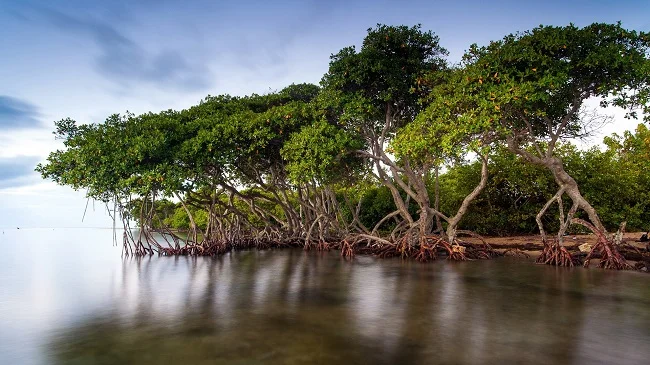
Rotary E-Club of One Nigeria and People Planet and Peace Foundation plant mangrove trees in Akodo Ise, Lagos, to help protect the coastal community.
From a small village tucked beside the water’s edge in Akodo Ise, roots now stretch into wet soil – thanks to hands that came together across cities. Trees rise where waves once crept closer each year. Not just planting, but shielding lives, one sapling at a time. Behind every trunk stands a choice: defend what floods could take. This work moves quietly, without speeches or banners. Nature answers slowly – but it does answer.
Around Akodo Ise in Lagos State, mangroves are going into the ground thanks to a joint effort by the Rotary E-Club of One Nigeria and the People Planet and Peace Foundation. While one group brings structure, the other adds on-the-ground reach – both aiming at restoration in Ibeju-Lekki. This patch of land sees new life because cooperation replaced isolation. Where water meets soil, roots now take hold slowly. Because degraded areas need more than talk, action sprouts here branch by branch. With each tree placed into mud, resilience builds without fanfare.
A weekend drill unfolded under a spring sky – Saturday, May 23, 2026 – meant to shield homes near the shore. Waves had been pushing harder lately. Salt crept into soil where it didn’t belong. Storms left marks no one ignored. This was about holding the line, quietly. Not waiting until water reached doorsteps.
Seun Agboola once led the Rotary E-Club of One Nigeria. This wasn’t simply about planting trees, he explained. Instead, it aimed at supporting struggling neighborhoods facing climate challenges. For him, action mattered more than symbolism.
Online meetings define how this Rotary group runs, yet it holds the same status as any official chapter. Flexibility marks its rhythm, though the work stays familiar. Mostly digital talks link members, however hands-on efforts in local areas continue just the same. Virtual spaces host chats, still friendships grow through shared tasks. Service remains central, even when screens replace meeting halls.
From her perch at the window, Agboola mentioned that Rotary International – spanning over 46,000 clubs worldwide – keeps circling back to safeguarding nature. Though scattered across continents, its groups share a quiet persistence about lasting change. Not loud fanfare, just steady motion toward cleaner systems. While many drift past such goals, this network holds course. Even small actions ripple through their chapters. Because protecting what remains matters more each season.
Funny thing – Rotary made “Supporting the Environment” an official priority back in 2020. That move, according to him, showed how clean air, calm communities, healthy lives, and long-term progress are quietly tangled together.
He mentioned that Rotary focuses on restoring mangroves, while also supporting tree planting efforts. River and beach clean-ups happen alongside actions to cut down on plastic waste. Biodiversity protection is part of it, just like initiatives promoting solar power. Schools receive environmental education programs too, woven into broader community activities.
Water conservation shows up in different spots. Rainwater gets collected where it falls. Sanitation help reaches communities that need it. Restoration work touches entire watersheds. Freshwater grows cleaner through focused effort.
“Rotary invests in protecting freshwater ecosystems, watershed restoration, water quality improvement and sanitation initiatives,” Agboola said.
Freshwater efforts link Rotary with the United Nations Environment Programme, though their reach extends further. One part focuses on cutting greenhouse gases, yet another strengthens how towns adapt when weather shifts occur.
He pointed to efforts like solar and wind power, farming that protects the soil, also teaching people about weather changes.
He mentioned that Rotary aims to care for nature by starting small where people live, yet keeping big-picture ideas in mind. Their approach leans on real data instead of guesses when solving ecological problems. Doing good work nearby can ripple outward through smarter choices. Local actions matter more when tied to wider efforts across regions. Solutions stick better if tested thoroughly first. Nature gets stronger when communities apply what proves effective.
From up on the small stage at Akodo Ise’s school hall, Miss Olabisi Kumuyi made her point clear – trees need protection. She spoke as part of a climate talk aimed at opening eyes. Her role? Secretary for the Climate Beyond Borders Caravan. With calm but firm words, she told villagers that slashing greenery without thought must end. Each tree felled weakens the land a little more. Though voices rose outside, hers held steady inside. People shifted in their seats when she mentioned floods tied to bare hillsides. Not one leaf should fall unless there is reason.
From her point of view, people should start viewing trees along with mangroves as shields when floods come or climate dangers arise. A shift like that could change how neighborhoods prepare. What if roots and trunks became frontline guards? It’s not just about planting more greenery – it’s seeing them as quiet protectors already in place. When water rises, these plants stand firm without making a sound.
One thing they did was stop by LUFASI Nature Park during their schedule. A signpost went to the Lekki Conservation Centre because of their visit.
Deep in LUFASI Nature Park, a quiet voice rose – Mr. Desmond Majekodunmi reminded those gathered that small steps today shape tomorrow’s air, water, trees. His words landed softly yet carried far, urging steady effort where it matters most: right here, across African soil, not just Nigerian ground.
Faster than most notice, environmental damage marches on – Majekodunmi urges folks to rethink their bond with the natural world. Instead of fighting it, he suggests fitting life into nature’s rhythm before imbalance deepens.
“After living in Kenya for about seven years and listening to highly informed people, I realised that nature is very important,” he said.
Breathe easy – that’s harder now because forests shrink, rivers choke. Roots rot when concrete spreads across soil that once soaked up rain. Life thrives where balance holds steady; tipping it disrupts cycles feeding communities. Birds vanish – silence follows. What grows today feeds tomorrow, yet seeds struggle in poisoned ground.
“So, I decided to focus on promoting what is truly important in life,” he added

Olalekan A. Abudu is a seasoned and dedicated News Journalist at REPORTERS ROOM, with over eight years of experience. He specializes in politics, climate change, health, and education, while also covering security, economic, and judicial issues. Committed to accuracy and balanced reporting, Olalekan exemplifies the principles of public-interest journalism.