


RCDI Expands Reach Through Water, Menstrual Health, Climate Resilience Programmes
By: Abudu Olalekan
The Resource Conservation and Development Initiative (RCDI) International has been making serious progress in 2026 — pulling underserved communities closer to safe water, proper sanitation, menstrual health support, and real environmental sustainability. And the numbers from the first half of the year tell a clear story.
Looking back at what RCDI pulled off between January and June, it’s clear the organisation didn’t just dip its toes in. Working hand-in-hand with government agencies, development partners, and local communities, they tackled some of the toughest public health and environmental issues facing vulnerable populations head-on.
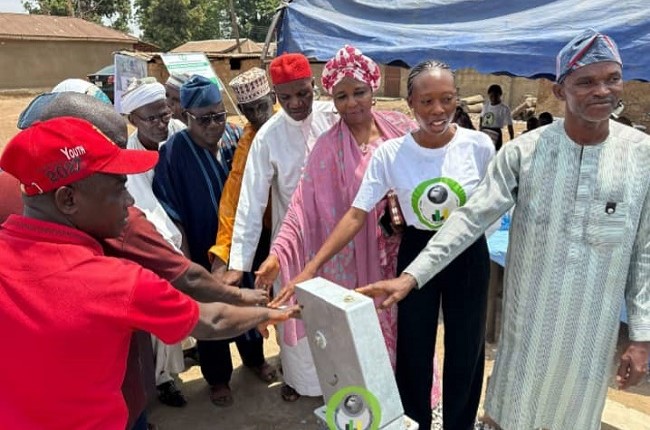
One standout moment? The rehabilitation of a community borehole in Bonugu, Kwali Area Council of the FCT. That single project changed things for residents who had long depended on unsafe water sources. It was rolled out as part of World Water Day activities and came bundled with water treatment products and hygiene awareness drives — all aimed at cutting down waterborne diseases.
But they didn’t stop there. RCDI showed up at a public sensitisation campaign in Lugbe, Abuja, organised by the Federal Ministry of Water Resources, and also took part in a stakeholder event hosted by RUWASSA in Kunyani Gosa, Abuja Municipal Area Council. Both gatherings zeroed in on sustainable water management and pushing access to WASH services further.
Speaking on the progress, the Executive Director of RCDI International, Mrs. Minite Okoroh-Oviaesu, made it clear — these wins didn’t happen by accident.
“The first half of 2026 has shown — again — that real change happens when communities lead, partners show up, and action is collective. Across our work in water, sanitation, hygiene, menstrual health, and climate resilience, the goal has stayed the same: lasting solutions for people who’ve been left behind for too long,” she said.
Then came the ThriveFlow 2026 initiative. Organised to mark Menstrual Hygiene Day under the theme “One Conversation: End Period Poverty,” it pulled adolescent girls, women, traditional leaders, educators, and development stakeholders into one room in Kwali Area Council. The conversation wasn’t comfortable — and that was the point. They tackled stigma, pushed for menstrual dignity, and handed out dignity kits plus educational materials to back it up.
RUWASSA, the FCT Ministry of Women Affairs, the Local Education Authority, the WASH Coordination Unit, district heads, and community leaders all showed up. That kind of turnout says something about how serious period poverty is finally being taken.
RCDI also teamed up with the FCT Ministry of Women Affairs for a menstrual hygiene awareness drive at Federal Government Girls’ College, Bwari. Students got practical lessons on managing menstrual hygiene — and were pushed to challenge the myths that still follow menstruation around.
On the environment side, things stayed just as active. For World Environment Day 2026, RCDI joined the Ministry of Environment in a tree-planting exercise at Government Secondary School, Maitama. Students weren’t just watching — they were hands-on, learning what real climate action looks like from the ground up.
Beyond direct projects, RCDI stayed plugged into bigger sector conversations through the WASH in Emergencies Technical Working Group and the National Menstrual Hygiene Management Technical Working Group. Those spaces matter — they shape emergency WASH preparedness, menstrual health programming, and how services actually reach the people who need them most.
They also backed the Community-Led Total Sanitation Plus Plus (CLTS++) campaign in Kwali Area Council, running under RUWASSA’s coordination with UNICEF support. The focus was simple — push behaviour change, strengthen sanitation habits, and keep communities open-defecation-free through grassroots mobilisation.
Looking ahead, Okoroh-Oviaesu says the second half of the year will bring even more push. Safe water, dignified sanitation, menstrual health, and a clean environment — she insists these aren’t luxuries. They’re the foundation of sustainable development.
And RCDI plans to keep building on that. Stronger partnerships, smarter community-driven solutions, and a clear focus on the people who need it most. That’s the road ahead — and from the look of things, they’re not slowing down.

Olalekan A. Abudu is a seasoned and dedicated News Journalist at REPORTERS ROOM, with over eight years of experience. He specializes in politics, climate change, health, and education, while also covering security, economic, and judicial issues. Committed to accuracy and balanced reporting, Olalekan exemplifies the principles of public-interest journalism.