



Technology Mechanism showcases partnerships driving climate action at scale
By: Abudu Olalekan
UN Climate Change and its partners used the June Climate Meetings (SB64) to land a pretty clear message: if the world wants the Paris Agreement to move from promises to progress, it can’t be done in silos. Not even close. Partnerships are the real engine behind getting climate technologies built, funded, shared, and actually used where they matter.
That was the big theme at a side event called Accelerating Climate Action through Partnerships under the Technology Mechanism. It pulled in a mix of people who don’t always sit at the same table—governments, climate funds, international organisations, research groups, and industry players. And honestly, that mix is the point. This is where ideas stop being “innovations” on paper and start becoming tools for mitigation and adaptation on the ground.
At the centre of it all is the UNFCCC Technology Mechanism—made up of the Technology Executive Committee (TEC) and the Climate Technology Centre and Network (CTCN). Think of it as the UN climate system’s tech arm, helping countries identify the technologies they need and figure out how to develop and deploy them without getting stuck.
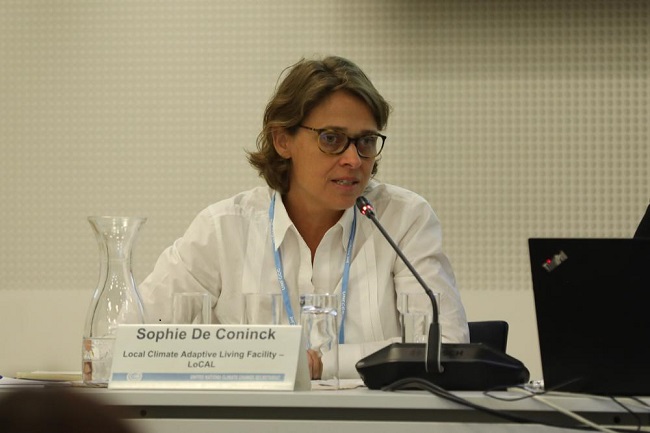
Sophie De Coninck, Director of the Means of Implementation Division at UN Climate Change, put it bluntly: technology is essential, sure. But technology doesn’t roll itself out. “No single institution alone can deliver the scale of transformation required by the Paris Agreement,” she said, stressing that real impact only happens when policy, finance, capacity-building and implementation link up. That’s why partnerships sit at the heart of the Technology Mechanism’s work.
The discussion also circled back to how the TEC and CTCN are working with a wide range of partners to deliver the Technology Mechanism’s Joint Work Programme (2023–2027). The goal is simple to say, harder to do: scale solutions fast, for both cutting emissions and building resilience.
“Partnerships enable us to connect governments, technology providers, financial institutions and practitioners around practical solutions that can be scaled and replicated,” said Ariesta Ningrum, Director of the CTCN. And yes—“practical” did come up a lot. People are tired of big talk with no delivery.
Several speakers pointed to partnerships that are already producing results. Dietram Oppelt, speaking for Germany’s National Designated Entity (NDE), shared how Germany is collaborating with the TEC to support industrial decarbonization. The Republic of Korea highlighted its backing of the Technology Mechanism’s AI for Climate Action Initiative through the UNFCCC–KOICA Climate Future Partnership.
There was also a fresh push on AI, with the announcement of the Technology Mechanism’s AI for Climate Action Award 2026. It’s meant to spotlight real-world uses of artificial intelligence that support climate action—especially in developing countries, where the needs are urgent and resources are tighter.
On the finance side, Mikko Ollikainen of the Adaptation Fund made the case for tighter connections between technology support, innovation, and climate funding. Because without that bridge, countries can end up with good project ideas that never make it past the concept stage. Happens too often.
Anne Dekeukelaer, representing the Cement and Concrete Breakthrough Agenda, shared lessons from working with the CTCN to speed up change in one of the world’s most emissions-heavy sectors. Cement is complicated. It’s also unavoidable in construction. So progress there matters.
One of the key announcements was that UN Climate Change and the CTCN have joined the Digital Public Goods Alliance (DPGA)—a global network focused on open and interoperable digital tools for sustainable development. It’s a technical move, but it signals something bigger: digital systems and shared platforms are becoming central to how climate action scales.
Speakers also looked ahead to how partnerships can strengthen delivery of the newly launched Belém Technology Implementation Programme, adopted at COP30, which aims to boost support for the technology priorities identified by developing countries. In plain terms: countries say what they need, and the system should respond faster and better.
Moderator Maria Misovicova, Chief of Resource Mobilisation and Partnerships at UN Climate Change, summed it up in one line that stuck: technology alone doesn’t drive climate action—partnerships do. Because partnerships are what bring together governments, development banks, climate funds, industry, innovators, and research institutions and turn scattered efforts into something scalable.
Looking forward, participants pointed to a few priorities: stronger links between tech support, finance and capacity-building; more country-led partnerships; scaling digital and AI-enabled climate solutions; and deeper collaboration with climate funds and development finance institutions so implementation doesn’t stall.
TEC Chair Pedro Ivo Ferraz da Silva closed on the same truth the room kept returning to: no single institution can deliver the scale of transformation the climate crisis demands. Progress depends on collaboration—connecting policy, finance, innovation, and implementation—so climate technologies reach the communities and countries that need them most. Even when it’s messy. Even when it takes time. That’s the work.

Olalekan A. Abudu is a seasoned and dedicated News Journalist at REPORTERS ROOM, with over eight years of experience. He specializes in politics, climate change, health, and education, while also covering security, economic, and judicial issues. Committed to accuracy and balanced reporting, Olalekan exemplifies the principles of public-interest journalism.
