


US Warns Nigerians Amid Lagos Protests Over Israel Iran Strain
By: Abudu Olalekan
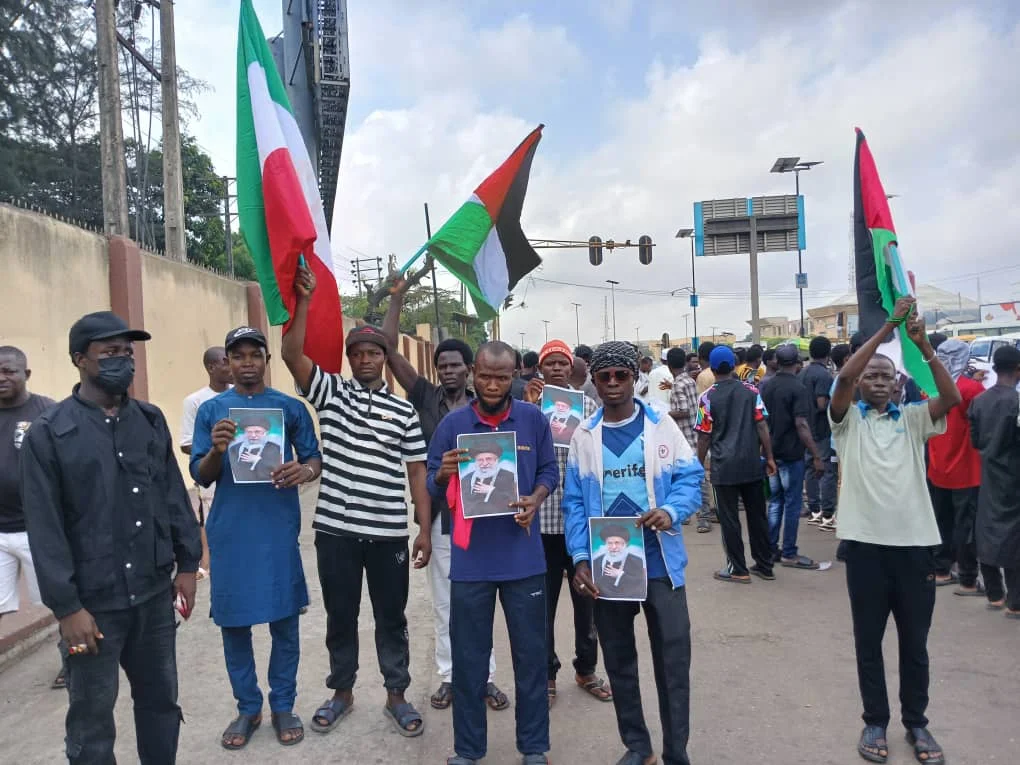
That Monday in Lagos held a strange weight. A shift hung in the air. Followers of the Islamic Movement in Nigeria, known as Shi’ites, moved through city paths. They gathered along Maryland road. Anger shaped their steps. Their demand rose like smoke – denouncing what they saw as the violent killing of Iran’s top leader, Ayatollah Ali Khamenei. They blamed joint attacks by the U.S. and Israel. No warning given, they claimed. Grief drove them forward. Voices cracked under the heat. Streets echoed names shouted at sky level.
Other cities felt it too.
Monday’s gathering in Lagos came after crowds rose in Kano, Yobe, Gombe, and Bauchi just one day earlier. By Sunday, streets were alive – voices loud, flames rising from torn banners, images lifted high of someone they saw as their guiding light.
Fires moved toward the southern areas just then.
In Lagos, people walked down the Maryland road holding signs that shouted against what they called Iran’s invasion. Peace will stay at the center, said Muftau Zakariya, leader of IMN in the South-West, even as marches spread through every part of the region. Not pausing a beat, he turned his words toward America, blaming it for repeatedly stepping into countries like Venezuela – actions he labeled as clear meddling. On top of that came a firm warning: Nigeria must say no if U.S. soldiers ever try to set foot here.
Since the U.S. got involved, violence has grown worse in Nigeria, said Zakariya – pointing at recent assaults in Kwara State as proof of foreign interference.
Out in front too, Muhammadu Bashir repeated much the same worry – this outcry meant only to show sorrow for fallen Iranian figures. Not a bit extra. Just that.
From Gombe, IMN’s Muhammad Abbari called the strike on Khamenei regrettable, wrong – yet asked supporters to remain steady. Peace marks what we do now, he stated; expressing concern stands as our only aim. Watched closely by officers along the route, each movement stayed under watch. Nothing broke out. Silence followed when it concluded.
Evening light touched the streets of Kano differently that day. State police chief Ibrahim Bakori said the Shi’ite march hadn’t been cleared with authorities beforehand. Still, officers were already on alert because tips had come in earlier. Because of that, forces moved fast – positioned before anything could go wrong. Officers walked beside protesters just to keep things calm, especially since Ramadan meant tired bodies after long hours without food or water. Starting out at about half past two, the crowd flowed from Fegge Central Mosque near Kofar Waika. On hands and knees, people filled the street, stopping cars mid-flow. White cloths draped over shoulders caught the afternoon light. Candles sparked one by one, small flames cupped against wind. Bystanders received cups of water, soft dates placed gently into palms. By four in the afternoon, it had faded into quiet. Officers lingered nearby, watching without moving.
Out here in Yobe, things felt heavier. Through Potiskum, Bode, and Nguru, people moved in large groups – faces set, holding pictures of Khamenei, Iranian banners fluttering above them, flames eating at U.S. and Israeli flags, anger turning into firelight. Standing before them, protest figure Abdullahi Hassan spoke with voice shaking – “This loss has cut deep, we did not see it coming.” Yet something held firm in his words. He made clear the streets would stay full, no matter what comes next.
Peace held through Sunday’s event in Bauchi, according to state police rep Nafiu Habib, who spoke directly to Reportersroom. Nothing chaotic unfolded, he noted – calm stayed intact from start to finish. So far, his team has seen no signs of unrest or disturbance. The gathering passed quietly, marked by order rather than conflict.
After that, a warning arrived from the United States.
A fresh alert came Monday from U.S. authorities, aimed at Americans living in or visiting Nigeria. Rising tensions between the U.S. and Iran are fueling concern, making caution necessary right now. Because of possible flight interruptions – air corridors may shut without notice – planning ahead matters more than usual. Instead of waiting, some might choose to sign up for the Smart Traveler Enrollment Program; it connects travelers directly to embassy alerts. Updates also flow through the State Department’s WhatsApp channel, where timely warnings appear almost instantly.
Word spread when Iranian outlets announced Khamenei had died, soon after bombs hit. Alongside him, multiple top figures were said to have been lost. In response, Tehran fired projectiles toward American outposts through the Gulf region – Saudi sites among them – with promises of payback for their slain figurehead. That moment shifted everything without warning.
Midway through the attacks on Saturday, US President Donald Trump spoke publicly. His purpose stood firm – removing dangers he described as urgent, coming from Iran’s leadership. When the fighting ends, he urged people inside Iran to shape their nation’s future. The message came straight, without pause.
Folks everywhere are paying attention now – really looking. Not just glancing, but staying fixed on what happens next.

Olalekan A. Abudu is a seasoned and dedicated News Journalist at REPORTERS ROOM, with over eight years of experience. He specializes in politics, climate change, health, and education, while also covering security, economic, and judicial issues. Committed to accuracy and balanced reporting, Olalekan exemplifies the principles of public-interest journalism.