


Plot to Kill Iran’s Supreme Leader: How Hacked Cameras and US Intel Made It Possible
By: Abudu Olalekan
There are stories that sound like something out of a Hollywood thriller. This is one of them. But it’s real.
Traffic cameras. Hacked ones. Planted quietly on the streets of Tehran, giving Israel a live, uninterrupted window into one of its most dangerous adversaries. For years, those cameras sat there, feeding data, helping map the city street by street, movement by movement. Nobody noticed. Or if they did, it was already too late.
That, according to an Israeli official, was just one piece of a far bigger puzzle.
The full picture, parts of which were first detailed by the Financial Times, reveals something much more chilling — an AI-driven “target production machine,” as one Israeli source described it. A system that takes in visual intelligence, human intel, intercepted communications, satellite imagery, signals intelligence — everything — and spits out a precise 14-digit grid coordinate. A location. A target.
It’s not magic. It’s math. Very powerful, very expensive, very deadly math.

The system took nearly a decade to build. It requires a whole team — engineers, data analysts, technologists — who validate every strike recommendation, fine-tune the algorithms, and make sure the machine doesn’t just produce results, but accurate ones. According to the source, it’s been quietly refined over time, tested again and again, often against targets who never saw it coming.
And the track record speaks for itself.
Israel has, over the years, assassinated dozens of Iran’s top nuclear scientists. Stolen the country’s entire nuclear archive. Killed Hamas’ political leader right in the heart of Tehran. Each of those operations pointed to something deeper — a long, sustained penetration of Iran’s most inner circles. Not occasional breakthroughs. A permanent presence.
When the 12-day war between Israel and Iran broke out last June, that same system was used in the very first strike. Iran’s highest-ranking military officer, the head of its elite Islamic Revolutionary Guard Corps, and a close aide to Supreme Leader Ali Khamenei — all killed. One coordinated opening blow.
Then came Saturday.
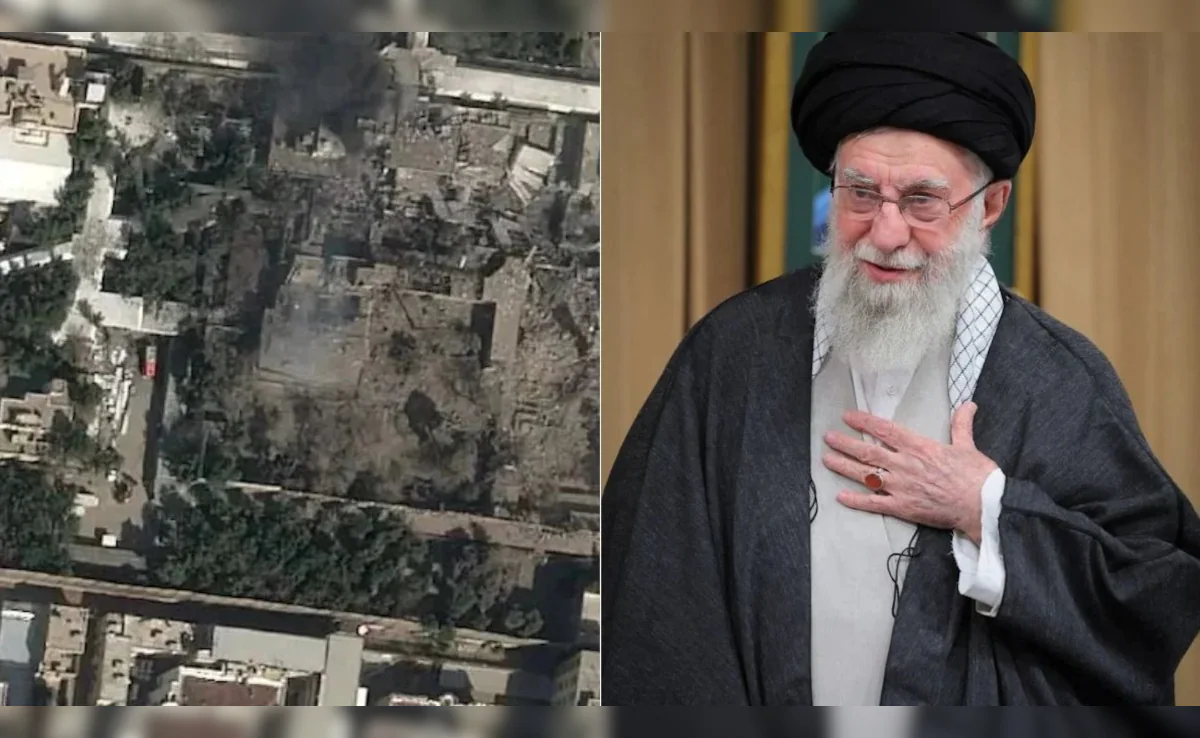
The US and Israel launched a massive joint strike on Iran. The primary target this time was Khamenei himself. Israeli officials believed he felt more exposed during daylight hours — that he was less likely to disappear into his underground bunkers when the sun was up. Defense Minister Israel Katz had previously admitted they’d missed their window in June. He’d gone silent. Gone underground.
This time, the opportunity was different.
According to Reportersroom’s sources, Israeli Prime Minister Benjamin Netanyahu had long believed that the ongoing US-Iran nuclear negotiations were going nowhere. The Trump administration kept shifting its stance on what it actually wanted from the talks. Netanyahu — who had spent decades warning the world about a nuclear Iran, who’d lobbied fiercely against the previous nuclear deal — wasn’t buying any of it.
He’d made up his mind.
On February 11th, Netanyahu sat down with President Donald Trump at the White House. The meeting lasted nearly three hours. One photo was released. That’s it. No joint statement. No press conference. Because, as Reportersroom had earlier reported, the conversation wasn’t about diplomacy. It was about what happens when diplomacy collapses. Netanyahu brought fresh intelligence on Iran’s military capabilities, and together, they began laying the groundwork for what would become a joint operation.
Friday afternoon. 3:38 p.m. Eastern Time.
Trump gave the order. The message was brief and blunt: “Operation Epic Fury is approved. No aborts. Good luck.” Those words came from the top US military officer involved, General Dan Caine.
“This was a daylight strike based on a trigger event conducted by the Israeli Defense Forces, enabled by the US Intelligence Community,” Caine told reporters Monday.
The strike hit. Hard.
Within hours, Israel was cautiously optimistic — though confirmation hadn’t come yet. Then, early Sunday morning, Iran’s own state broadcaster ended the suspense.
“The Supreme Leader of Iran has Reached Martyrdom.”
Just like that. The machine had done its job

Olalekan A. Abudu is a seasoned and dedicated News Journalist at REPORTERS ROOM, with over eight years of experience. He specializes in politics, climate change, health, and education, while also covering security, economic, and judicial issues. Committed to accuracy and balanced reporting, Olalekan exemplifies the principles of public-interest journalism.

